

Who was Perito Moreno? Francisco Pascasio Moreno (1852–1919) was an Argentine naturalist and explorer who traveled through Patagonia in the 19th century, named Lake Argentino in 1877, acted as an expert in the border conflict with Chile, and donated the lands that gave rise to the country's national parks.
We sail on the lake he named in 1980, within a National Park that exists, in large part, thanks to the idea he championed. On board, our guides tell his story almost daily. This is the written version.
Who was Perito Moreno: essential facts
| Date | Detail |
|---|---|
| Full name | Francisco Pascasio Moreno |
| Nacimiento | 1852, Buenos Aires |
| Death | 1919, Buenos Aires |
| Job | Naturalist, explorer, geographer, and civil servant |
| Why “Expert” | He was the Argentine expert (technical expert) on the border issue with Chile |
| Legacy in the region | He named Lake Argentino and Mount Fitz Roy; a glacier in the Park bears his name |
A collector who became an explorer
From a young age, Moreno collected fossils, bones, and objects he found on his travels. This curiosity led him to journey south when Patagonia was, for the Argentine state, a territory almost entirely unmapped. In the 1870s, he undertook several expeditions along rivers, plateaus, and lakes that, until then, were well known to their original inhabitants, the Tehuelche and Mapuche peoples, but which did not appear on official maps.
His collections formed the basis of a natural sciences and anthropology museum that later became the La Plata Museum, which he himself directed for years.
1877: the baptism of Lake Argentino
In the summer of 1877, after sailing up the Santa Cruz River from the Atlantic coast, Moreno reached the shore of an immense lake with milky waters, surrounded by mountains. He named it Lake Argentino. On that same voyage, he named Mount Fitz Roy in honor of the captain of the Beagle.
This upstream journey is the reverse of the path taken by glacial meltwater: from the ice to the lake and from the lake to the sea via the Santa Cruz River. We describe this in " The Santa Cruz River: The Journey of Glacial Water to the Atlantic ."
Moreno saw the lake without docks, without boats, and without a town. El Calafate did not yet exist; it would only be founded in 1927, as we reviewed in the history of El Calafate.
Captivity and escape
Not all of his expeditions ended well. On one of his trips through northern Patagonia, around 1880, he was detained by an indigenous group during a period of intense conflict between the native peoples and the state. He managed to escape and travel down a river on a makeshift raft, an episode he himself recounted and which has become part of his legend.
It's important to read this story in its context: the same years as his explorations coincided with the military campaigns that dispossessed the indigenous peoples of their lands. For information on who inhabited Lake Argentino before these voyages, see our article on the Aonikenk, the first inhabitants of Lake Argentino.
The expert on the borders with Chile
At the end of the 19th century, Argentina and Chile were disputing the exact location of the border in the Patagonian Andes. Moreno was appointed as Argentina's expert: his task was to gather geographical evidence to support the country's position. He traveled through and studied the Andean region, and his work was key in the arbitration that resolved a significant part of the dispute in 1902.
That's where the nickname everyone knows him by comes from. "Perito" isn't a name: it's the position he held.
The origin of national parks
In recognition of his service, the State granted him land in Patagonia. In 1903, Moreno donated a portion of it, near Lake Nahuel Huapi, on one condition: that it be preserved as a public park for future generations. This donation is considered the starting point of Argentina's national park system.
Decades later, in 1937, Los Glaciares National Park was created, which today covers 726.927 hectares and is the largest in the country. The full story is found in the history of Los Glaciares National Park . Moreno died in 1919 with few resources, and his remains have rested for decades on an island in Lake Nahuel Huapi.
The glacier that bears his name
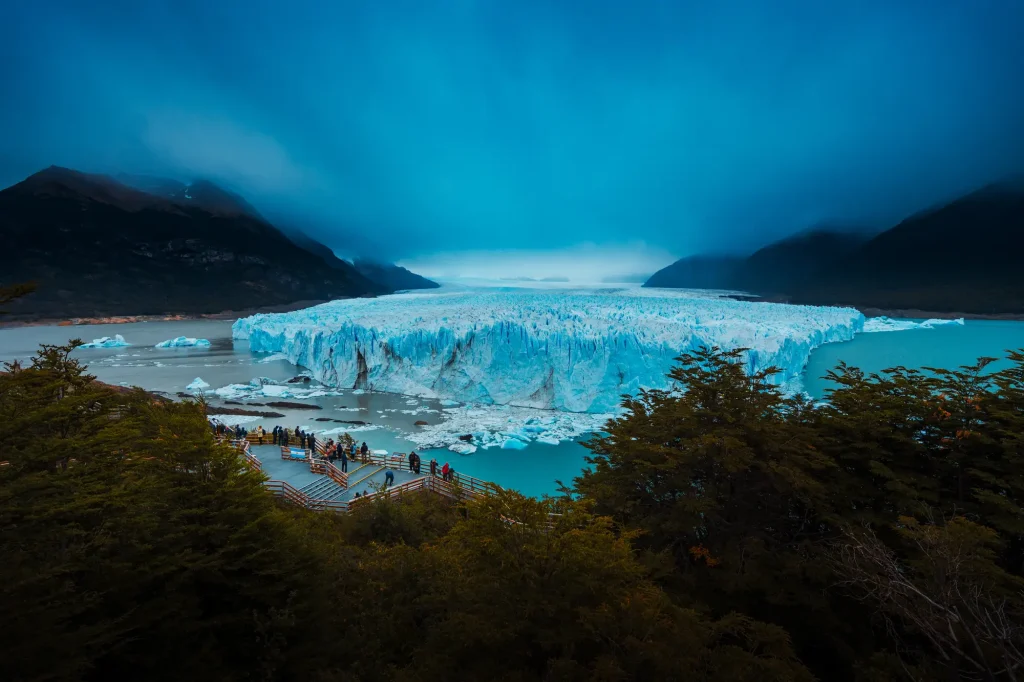
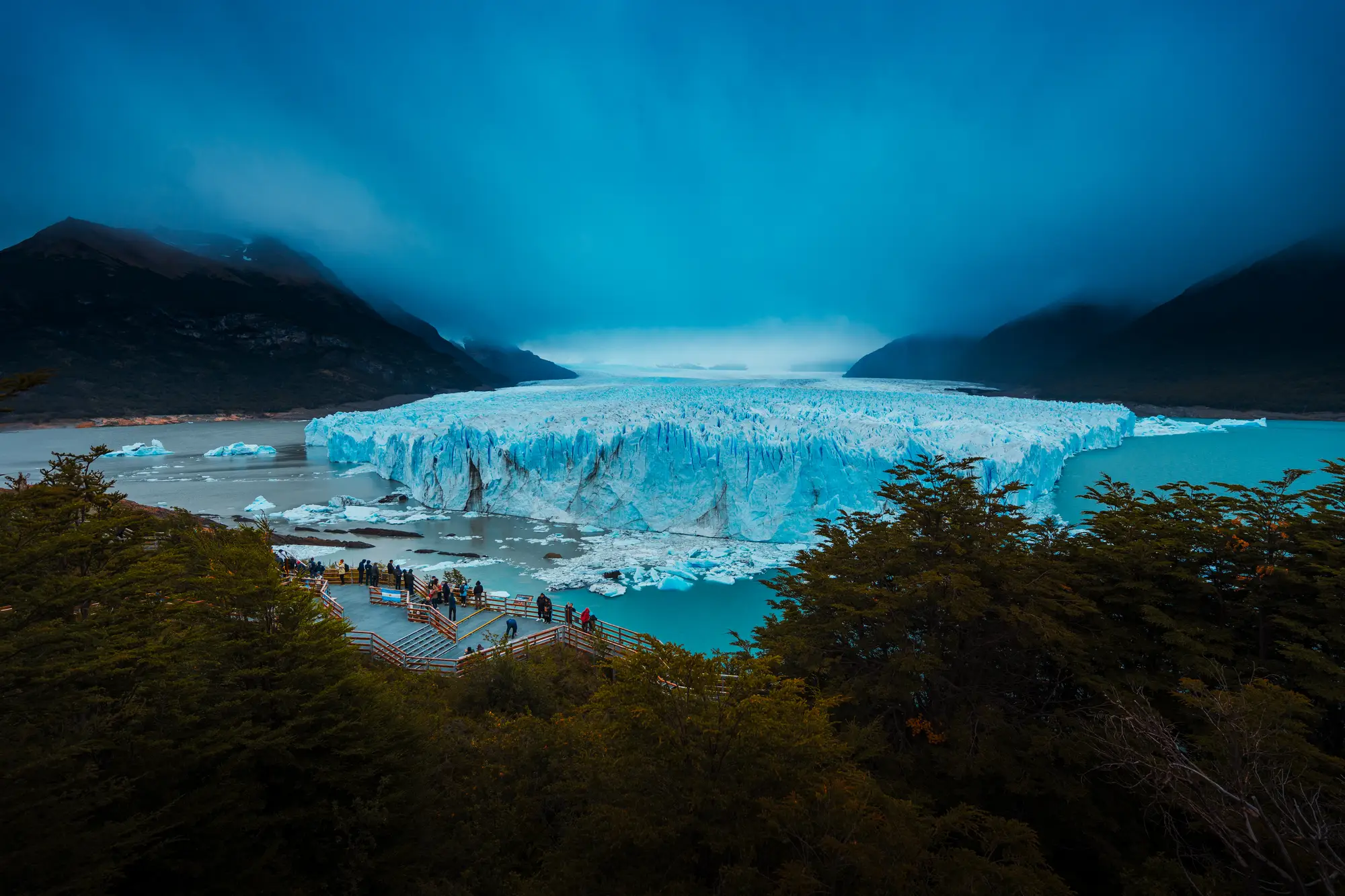
The Perito Moreno Glacier is located in the southern part of Los Glaciares National Park and is not included in our boat tours. However, we do explore the North Arm of the lake that he named: on the All Glaciers Boat Tour , we pass by the Devil's Mouth, the icebergs, and the Upsala Glacier, and continue to Glacier Bay to see the Seco, Heim, Peineta, and Spegazzini Glaciers. We explain why each glacier has its name in the section on the origin of glacier names.
Sail the lake that Moreno named
Meeting the man who named this lake changes the way you see it. If you'd like to explore it, including its northern glaciers, and disembark at Spegazzini Base, check availability and current rates on the All Glaciers Navigation website.
FAQ
Who was Perito Moreno?
Francisco Pascasio Moreno (1852–1919) was an Argentine naturalist and explorer. He named Lake Argentino in 1877, served as an expert on the border with Chile, and donated land that gave rise to the national parks.
Why do they call him "Expert"?
Because he was the expert, that is, the technical expert appointed by Argentina for the border issue with Chile at the end of the 19th century.
What names of the region did Perito Moreno give?
Among others, Lake Argentino, which he reached in 1877, and Mount Fitz Roy, named in homage to the captain of the Beagle.
Does the All Glaciers Navigation pass by the Perito Moreno Glacier?
No. The entire Glaciares tour covers the North Arm of Lake Argentino and the Bay of Glaciers: Upsala, Seco, Heim, Peineta and Spegazzini, with disembarkation at the Spegazzini Base.


