

The history of El Calafate begins long before tourism: it was Aonikenk territory, then a place where carts carrying wool from the ranches stopped, and in 1927 it was officially founded as a town. The creation of Los Glaciares National Park in 1937 shaped its destiny: today it is the national capital of glaciers.
At Solo Patagonia, we are part of that history. The family of René, our founder, arrived in Patagonia in 1886, and in 1980 we began sailing Lake Argentino, when El Calafate was still a secret known to only a few.
The history of El Calafate before the town: the Aonikenk
For thousands of years, the Lake Argentino region was inhabited by the Aonikenk, the southern Tehuelche people. They were nomadic hunters who followed guanacos and rheas across the steppe, moving with the seasons and knowing every watering hole, shelter, and trail. Their presence is still felt in archaeological sites throughout the area and in many place names. We dedicate a separate article to them: the Aonikenk, the first inhabitants of Lake Argentino.
Explorers: the lake gets its name
In the second half of the 19th century, expeditions arrived seeking to explore and map the south. In 1877, Francisco Pascasio Moreno reached the great lake and named it Lago Argentino. Over the years, other explorers, scientists, and priests named glaciers, hills, and bays: much of the toponymy we use on board today comes from that era.
The place of the cart drivers and the wool
At the end of the 19th and beginning of the 20th centuries, sheep farming transformed southern Patagonia. Ranches were established on the steppe, and wool became the region's great wealth. To transport it to the ports on the Atlantic coast, it was necessary to travel hundreds of kilometers in carts pulled by horses or oxen, journeys that lasted weeks.
Along that road, near the Redonda Bay of Lake Argentino, there was a place with water, shelter, and pasture for the animals: an ideal spot to spend the night. There, a thorny shrub with yellow flowers and purple berries grew abundantly—the calafate—which ended up giving the place its name. Legend says that whoever eats its fruit will return to Patagonia; we tell the story in the article about the calafate, the berry, and the legend.
1927: the official founding of El Calafate
Around that spot, settlers began to establish themselves, along with a general store and a few houses. On December 7, 1927, the national government officially founded the town, with the aim of consolidating the population in the area. That is why El Calafate celebrates its anniversary every December 7th.
For decades it was a small town, with dirt roads and a life organized around the ranches, the wind and the long winters.
1937: The National Park changes the destiny of the town
The creation of Los Glaciares National Park in 1937 was a turning point. Today, the park covers 726.927 hectares, is the largest in Argentina, protects 47 major glaciers, and forms part of the Southern Patagonian Ice Field. In 1981, UNESCO declared it a World Heritage Site. The complete history of the protected area can be found in our article on the history of Los Glaciares National Park.
With the Park came the first visitors, the park rangers and, little by little, the services to receive them.
From wool to tourism
At the end of the 20th century, sheep farming in Santa Cruz went through a profound crisis, with the fall in the international value of wool and the eruption of the Hudson volcano in 1991, whose ash affected a large part of the province. Tourism became the driving force of El Calafate.
In that process, we played a pioneering role. In 1980, we became the first privatization of lake services carried out by the National Parks Administration in Argentina, and since then we have been taking travelers to the glaciers of the North Arm. The arrival of the international airport in the early 2000s completed the connection of the town with the rest of the country and the world.
| Year | Milestone |
|---|---|
| 1877 | Francisco P. Moreno names Lake Argentino |
| 1886 | René's grandfather, the founder of Solo Patagonia, arrives in Patagonia |
| 1927 | Official founding of El Calafate (December 7) |
| 1937 | Creation of Los Glaciares National Park |
| 1980 | First lake concession of the Park: we begin to navigate |
| 1981 | UNESCO declares the Park a World Heritage Site |
| 2019 | We inaugurated the Spegazzini Refuge in Glacier Bay |
El Calafate today: national capital of glaciers
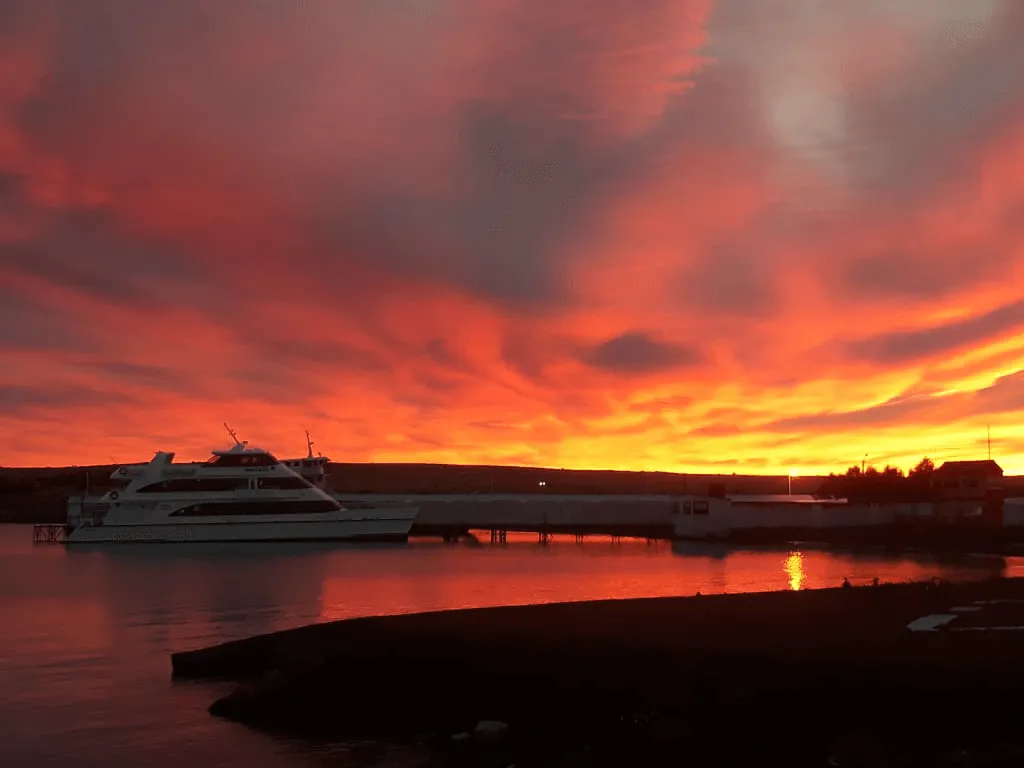
The former cart-carting town is now the national capital of glaciers and the gateway to the National Park. It retains much of its origins, however: the wind, the steppe that begins where the streets end, and Lake Argentino always in view. From the shore of Bahía Redonda, one can see the same lake that, to the west, extends into the mountains towards the Upsala Glacier.
Discover the story from the water
The best way to understand why this town was founded is to explore its surroundings. On the All Glaciers Navigation tour , we cross the Devil's Mouth, explore the Upsala icebergs and the Seco, Heim, Peineta, and Spegazzini glaciers, and at Spegazzini Base, the interpretive stations tell the story of explorers and settlers. Check availability and current rates on the tour page.
FAQ
When was El Calafate founded?
El Calafate was officially founded on December 7, 1927, when the national government decided to consolidate the population that had formed around a cart drivers' settlement next to Lake Argentino.
Why is the town called El Calafate?
Because of the calafate, a thorny shrub with yellow flowers and purple fruits very abundant in the area where the carts that transported wool stopped.
Who lived in the area before the foundation?
The region was inhabited for thousands of years by the Aonikenk, the southern Tehuelche people, nomadic hunters who roamed the steppe following guanacos and rheas.
When did tourism begin in El Calafate?
It grew after the creation of Los Glaciares National Park in 1937 and consolidated at the end of the 20th century, when the wool crisis led the town to rely on tourism. Solo Patagonia has been sailing on Lake Argentino since 1980.


