

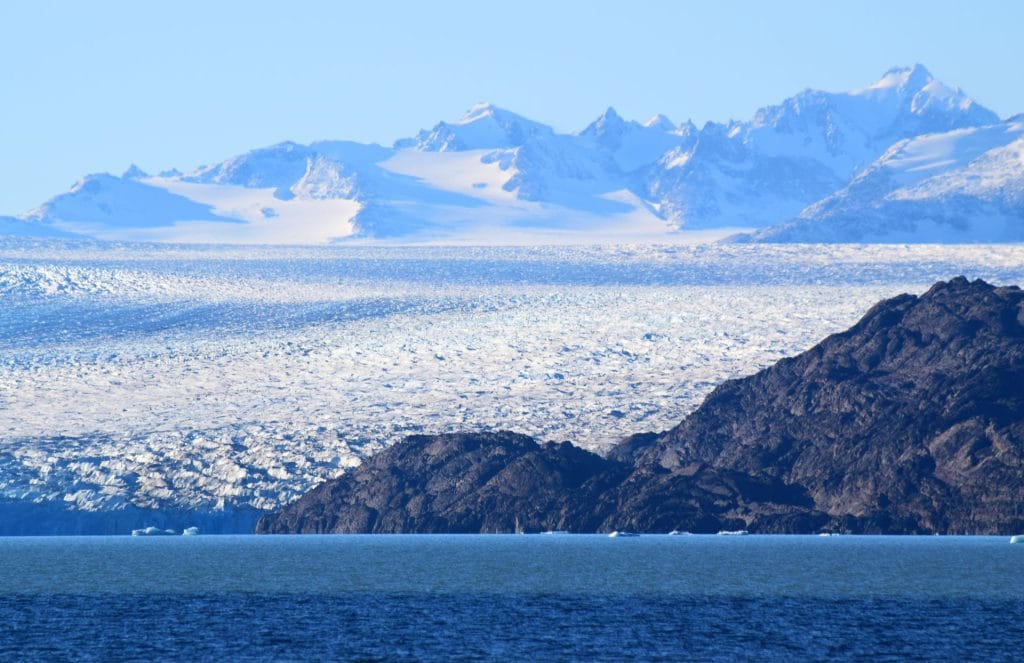
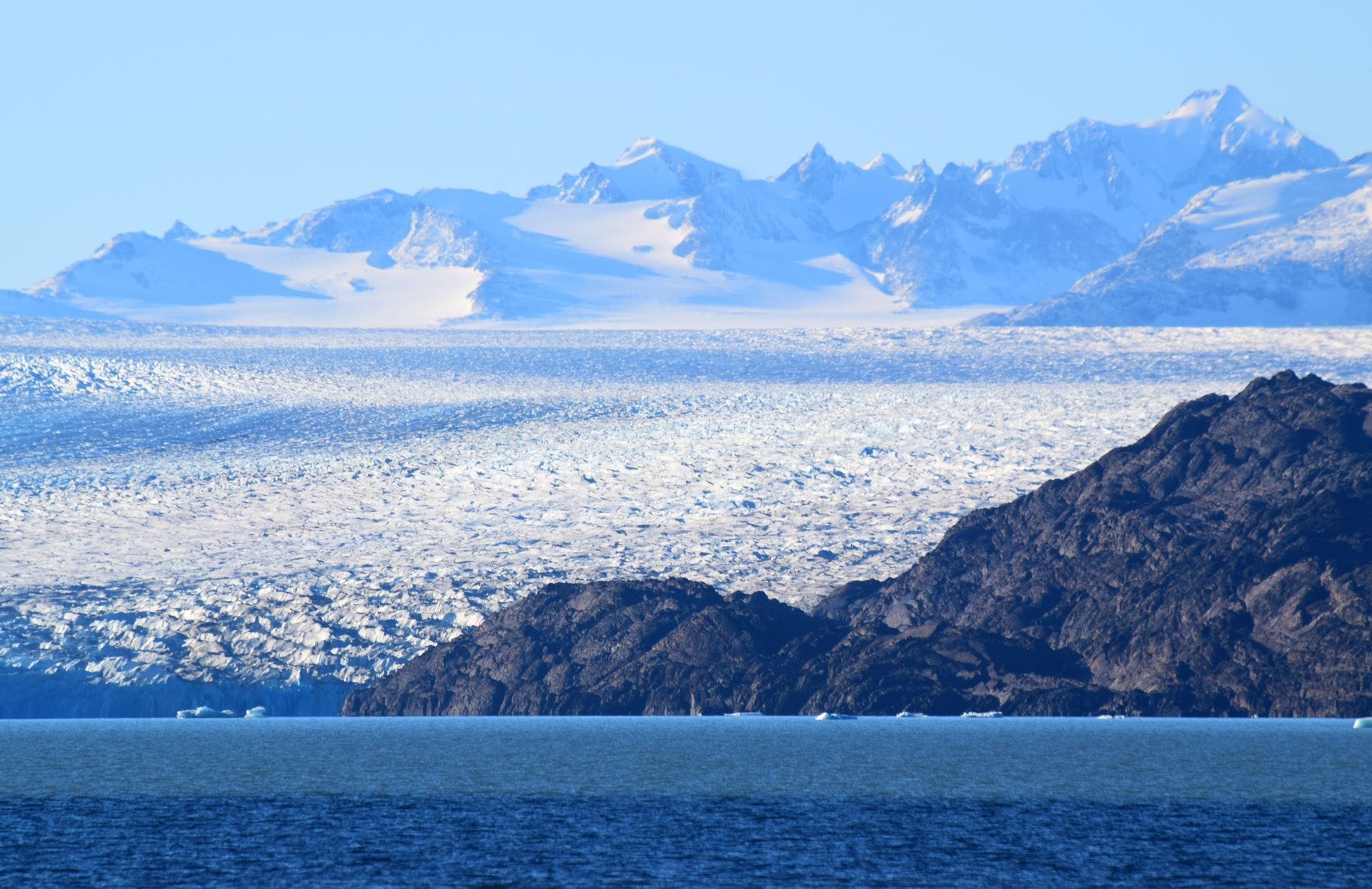
The names of the glaciers in Los Glaciares National Park mostly honor scientists and explorers: Spegazzini is named after a botanist, Uppsala after a Swedish university, Viedma after an 18th-century Spanish navigator, and Perito Moreno after Francisco P. Moreno. Others, like Seco or Peineta, describe what you see there.
On board, our guides have been telling these stories for decades: we've been sailing these waters since 1980, and each name is a gateway to understanding who explored, studied, and measured these ice formations. This is the written version.
Why are glaciers named after people?
During the second half of the 19th and the first half of the 20th centuries, southern Patagonia was the site of exploration expeditions, boundary surveys, and scientific studies. It was customary for those mapping a place to name it, often in homage to colleagues, mentors, or institutions. Thus, much of the toponymy of the Park is a record of that era.
Before that, the Aonikenk already named mountains, rivers, and lakes in their own language. Some of those names survived, such as Chaltén.
Spegazzini Glacier: a botanist among the ice
The park's tallest glacier, with walls reaching up to 135 meters above the lake, is named after Carlos Spegazzini, an Italian-born botanist and mycologist who developed his scientific career in Argentina and studied the country's flora, including that of Patagonia. It's a fitting tribute: at the foot of the glacier, at Spegazzini Base, the Andean Patagonian forest extends almost to the ice, and the interpretive stations along our trails focus on flora, fauna, glaciology, and history.
Upsala Glacier: the name of a university
The Uppsala Glacier, covering 765 km², owes its name to Uppsala University in Sweden, which was associated with the first glaciological studies of the region. Therefore, its name does not correspond to a person but to a scientific institution, something unusual in the toponymy of the park. One of our catamarans, the Upsala Connection, also bears its name.
Viedma Glacier: an 18th-century navigator
The Viedma Glacier and the lake into which it flows are named after Antonio de Viedma, a Spanish navigator who explored the interior of Patagonia in the late 18th century and reached this lake. It is one of the oldest European names in the region. Today, the Viedma Glacier is the largest glacier in the park, and we explore it on the Viedma Adventure , departing from Puerto Bahía Túnel, near El Chaltén.
Perito Moreno: the man who named Lake Argentino
Francisco Pascasio Moreno was a naturalist, explorer, and expert in the border negotiations with Chile. In 1877, he reached the region's large lake and named it Lago Argentino. He also named Lake Fitz Roy in honor of Captain Robert FitzRoy of the Beagle. The glacier that bears his name is located in the southern part of the park and can be visited from the public walkways; it is not part of our tour of the Brazo Norte (North Arm).
Heim, Seco, Peineta and De Agostini
- Heim Glacier: Its name is associated with the Swiss geologist Albert Heim, one of the great scholars of glaciers and mountains of his time. We see it during the voyage and from Spegazzini Base.
- Dry Glacier: Its name seems to describe what you see: a hanging glacier that does not reach the water, suspended on the mountainside.
- Peineta Glacier: Everything indicates that the name refers to its shape, which resembles a hair comb. It can be seen from Spegazzini Base, along with the Spegazzini and the Heim.
- De Agostini Lookout: The viewpoint at the end of our walkways pays homage to Alberto De Agostini, a Salesian priest who explored and photographed the Patagonian ice fields in the first half of the 20th century. His story is in the article about the De Agostini Lookout.
The names of glaciers at a glance
| Name | Origin | Where can you see it? |
|---|---|---|
| Spegazzini | Carlos Spegazzini, botanist | All Glaciers and Spegazzini Base |
| Uppsala | Uppsala University (Sweden) | All Glaciers |
| Viedma | Antonio de Viedma, Spanish navigator | Viedma Adventure |
| Perito Moreno Glacier | Francisco P. Moreno, explorer and expert | Public walkways in the Park |
| Home | Albert Heim, Swiss geologist | All Glaciers and Spegazzini Base |
| Dry | Descriptive: it doesn't reach the water | All Glaciers |
| Comb | Descriptive: its form | Spegazzini Base |
If you want to know what each one is like and where it's best viewed from, we recommend the article about the main glaciers of El Calafate.
Listen to these stories in front of the ice
Knowing the origin of glacier names changes the way you see them: behind each wall of ice lies an explorer, a scientist, or a shape someone recognized. On the All Glaciers Navigation tour , we pass by the Upsala, Seco, Heim, Peineta, and Spegazzini glaciers, and at the Spegazzini Base, you can walk to the De Agostini viewpoint. Check availability and current rates on the tour page.
FAQ
Why is the Spegazzini Glacier called that?
It is named after Carlos Spegazzini, a botanist and mycologist born in Italy who developed his scientific career in Argentina and studied the country's flora.
Where does the name of the Upsala Glacier come from?
From the name of Uppsala University in Sweden, associated with the first glaciological studies of the region.
Who was Viedma, the one with the lake and the glacier?
Antonio de Viedma, a Spanish sailor who at the end of the 18th century explored the interior of Patagonia and reached the lake that today bears his name.
Why is it called Perito Moreno?
Named after Francisco Pascasio Moreno, a naturalist and explorer who served as an expert in the border negotiations with Chile. In 1877, he named Lake Argentino.
Who named Lake Argentino?
Francisco P. Moreno, the Perito Moreno, who arrived at the lake in 1877 and gave it the name Lago Argentino.


