

Antonio de Viedma was a Spanish sailor and official who explored the interior of southern Patagonia in the late 18th century. He departed from the Atlantic coast, guided by Tehuelche people, and reached the large lake at the foot of the mountain range that now bears his name. Lake Viedma and the Viedma Glacier, the largest in the park, commemorate him.
Every time we set sail from Puerto Bahía Túnel with the Viedma Adventure, someone asks who Viedma was. This is the story we tell on board, with the facts that historiography considers reliable and without embellishment.
Who was Antonio de Viedma?
Antonio de Viedma belonged to a Spanish family of servants of the Crown. His brother Francisco de Viedma is remembered for founding Carmen de Patagones in 1779 on the Río Negro. Both were part of the plan by which Spain sought to occupy the Patagonian coast at the end of the 18th century, concerned about the presence of other powers in the South Atlantic.
Antonio was assigned the southernmost section of that plan: San Julián Bay, in what is now the province of Santa Cruz.
The Floridablanca colony and life in San Julián
In 1780, the Floridablanca colony was founded in San Julián by families of settlers brought from Spain. Antonio de Viedma was in charge of this settlement in a harsh environment: constant wind, scarce water, long winters, and supplies that depended on ships that took months to arrive. The colony lasted only a few years and was abandoned by order of the Crown. Today, its remains are a site of archaeological research.
What made survival and exploration possible was the connection with the Tehuelche people, the Aonikenk, who knew every watering hole and every pass on the plateau. We wrote about them in "The Aonikenk, the Tehuelche People of Lake Argentino ."
The journey to the mountain range
In the early 1780s, Viedma embarked on an inland expedition from San Julián, accompanied by Tehuelche guides. His objective was to explore the territory, seek resources for the colony, and learn the inland routes. After crossing the steppe, he reached a vast, cold-water lake at the foot of the Andes, which today bears his name.
Viedma left a journal of his journey, one of the first written descriptions of the interior of southern Patagonia by a European. It's worth clarifying: the Tehuelche people had known about these lakes long before. What Viedma contributed was the written record for the colonial world.
Antonio de Viedma and the names on the map
The lake took its name from its explorer, and the glacier that flows into its western end inherited the lake's name. Thus, a small map of history remains in the northern part of the Park:
| Place | What is | Relationship with Viedma |
|---|---|---|
| Lake Viedma | Large glacial lake next to El Chaltén | It is named after the explorer |
| Viedma Glacier | The largest glacier in Los Glaciares National Park | It takes its name from the lake. |
| City of Viedma | Capital of Río Negro | He remembers his brother Francisco |
The origin of the rest of the names in the Park, from Upsala to Spegazzini, is reviewed in the origin of the names of the glaciers.
From travel journals to today's navigation
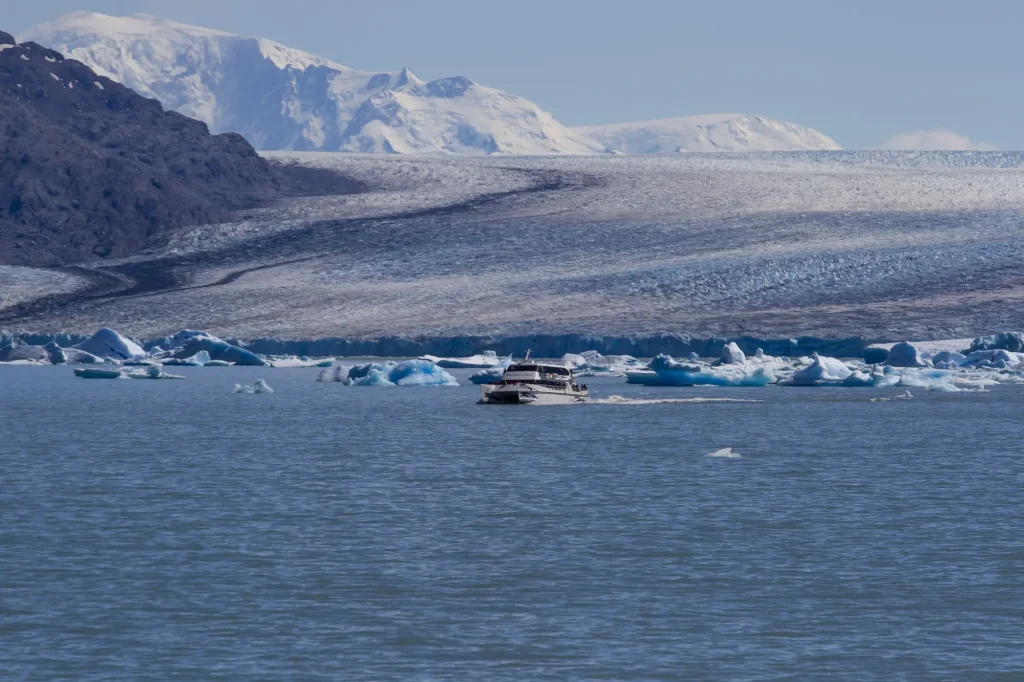
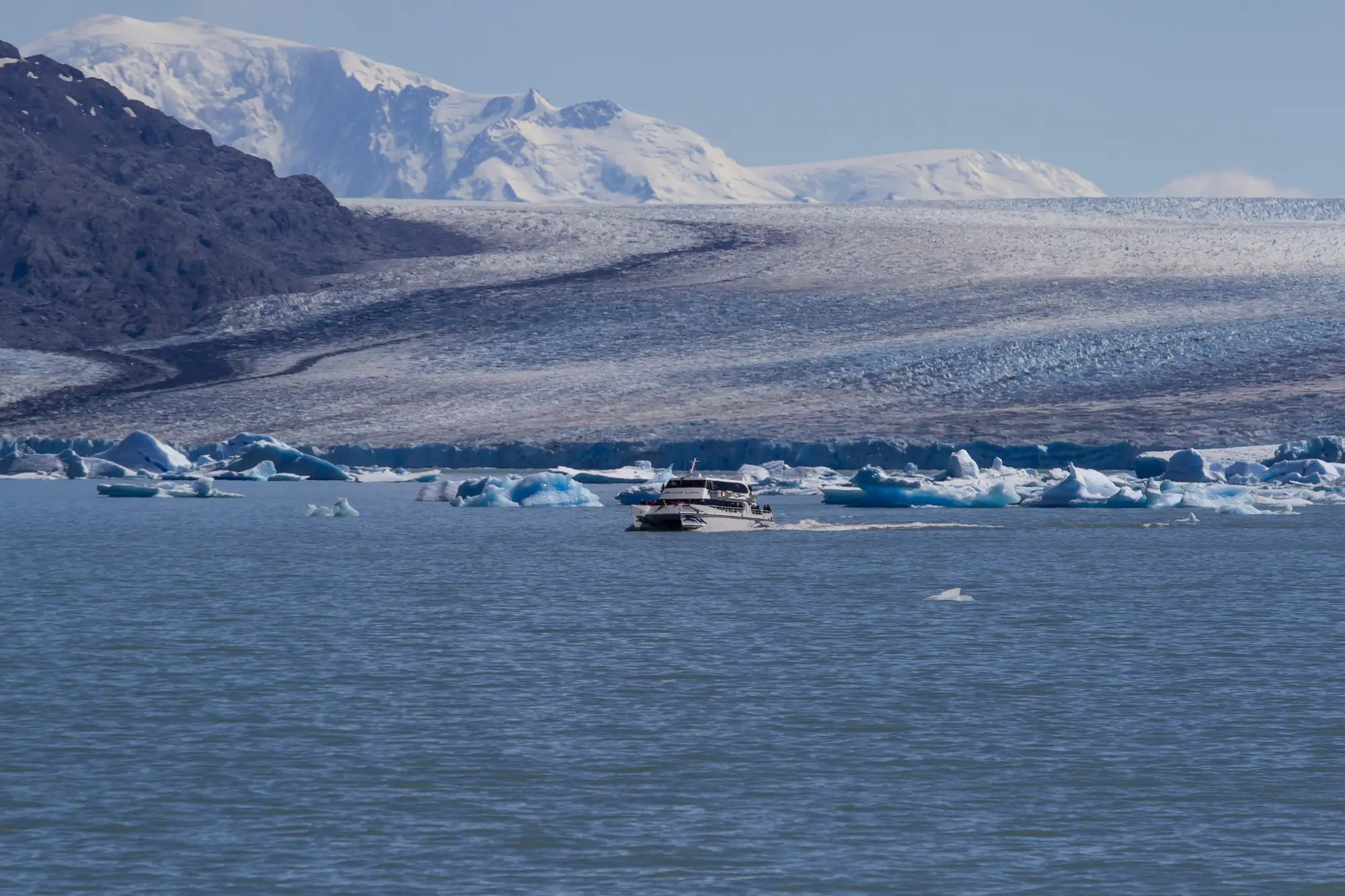
Viedma saw the lake from the shore after weeks of trekking. Today, the Viedma Adventure departs from Puerto Bahía Túnel, 18 km from El Chaltén, skirts the southern coast with views of the Huemul Massif, and disembarks at Cabo de Hornos Bay to hike to a viewpoint overlooking Iceberg Bay. Afterward, the group approaches the face of the Viedma Glacier, where the guide recounts its history and geology, and participants toast with ancient ice from the glacier itself.
If you want to understand the lake before sailing on it, start with Lake Viedma and El Chaltén and continue with the Viedma Glacier, the largest one.
Sail on Lake Viedma
Four hours on the turquoise waters of Lake Viedma, including a hike, a glacier visit, and the history of those who came before. Check availability and current rates on the tour page.
FAQ
Who was Antonio de Viedma?
A Spanish sailor and official who at the end of the 18th century was in charge of the Floridablanca colony in San Julián, and explored the interior of southern Patagonia as far as the lake that now bears his name.
Why is the Viedma Glacier called that?
Because it flows into Lake Viedma, which was named in honor of the explorer Antonio de Viedma.
Did Antonio de Viedma discover Lake Viedma?
He was one of the first Europeans to arrive and describe it in writing, but the Tehuelche people had known about it long before and were his guides.
How can you get to know Lake Viedma today?
Sailing it with the Viedma Adventure, which departs from Puerto Bahía Túnel, 18 km from El Chaltén, or with the Full Day version from El Calafate.


