

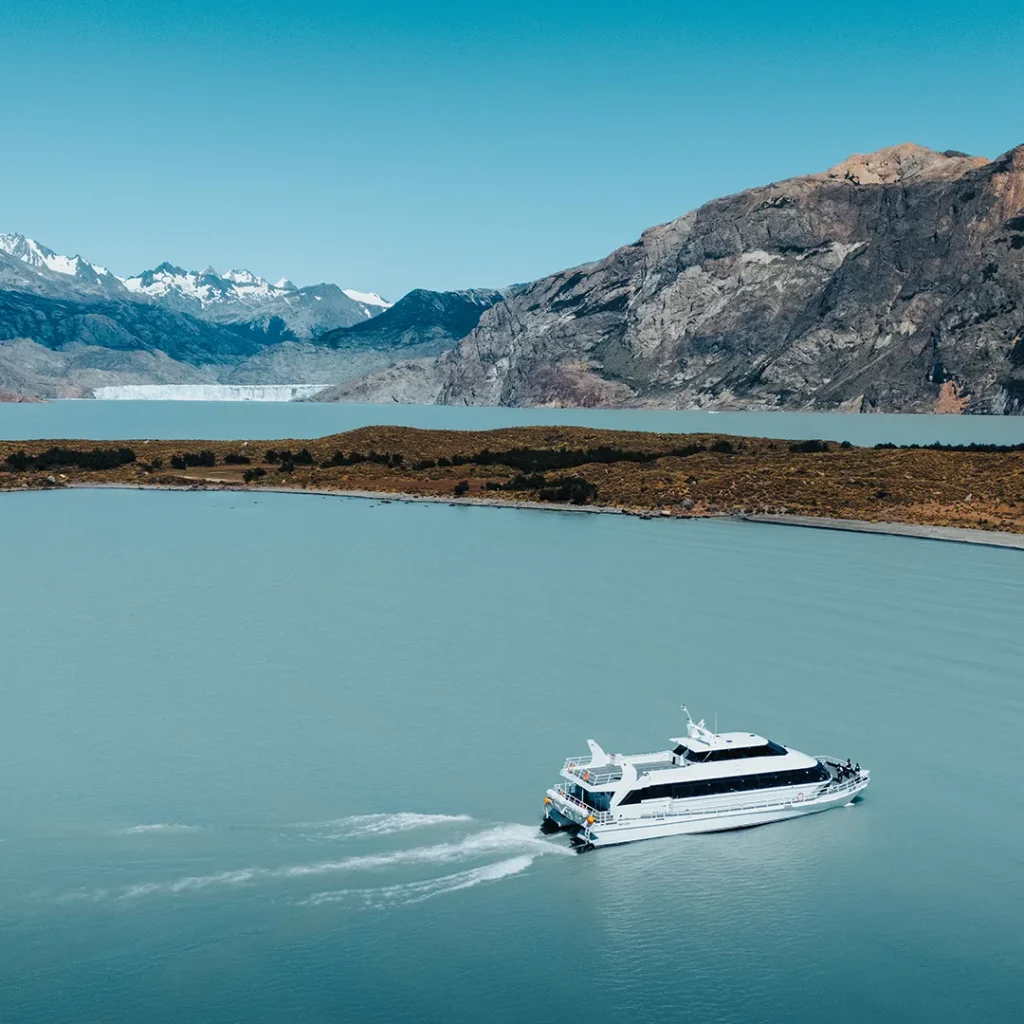

Lake Viedma is a large glacial lake at the foot of El Chaltén, in the northern part of Los Glaciares National Park. Its western end receives the face of the Viedma Glacier, the largest in the park, and its turquoise waters drain into Lake Argentino via the La Leona River.
We sailed across Lake Viedma with the Viedma Adventure. What follows is what our crew tells us about this lake: where it comes from, why it has that color, and what you can see when you travel along its southern shore.
Lake Viedma: where it is located and how it was formed
The lake is located in the province of Santa Cruz, east of the Andes Mountains and the Southern Patagonian Ice Field. It occupies a valley carved out by glaciers during the ice ages: when the ice retreated, the valley filled with meltwater, leaving the lake we see today, elongated from west to east.
At its westernmost point, the ice continues: there ends the Viedma Glacier, which still feeds the lake today. To the east, the water flows out through the La Leona River, which runs south and empties into Lake Argentino. The two large lakes in the Park are connected.
Why is Lake Viedma turquoise?
Glaciers grind down the rock they slide over, producing a very fine sediment called glacial flour. These particles remain suspended in the water and scatter the light, giving the lake its milky turquoise hue, which is more intense on sunny days. This is the same phenomenon that colors Lake Argentino; we explained it in the article about the color of Lake Argentino.
Where does the name come from?
The lake is named after Antonio de Viedma, a Spanish explorer who traveled through Patagonia in the late 18th century and reached its shores. The glacier, in turn, takes its name from the lake. It is one of the oldest European place names in the area, predating Francisco P. Moreno's exploration of Lake Argentino.
What can you see while sailing on Lake Viedma?
| Viedma Adventure Section | What does it look like |
|---|---|
| Exit from Puerto Bahía Tunnel | The lake shore and, on a clear day, the peaks surrounding El Chaltén |
| South coast | The Huemul Massif, the main feature of the landscape for much of the journey |
| Cape Horn Bay | Landing and easy walk to a viewpoint |
| Glass Viewpoint | Iceberg Bay with the Andes Mountains in the background |
| Viedma Glacier Front | Blue tones, deep cracks, and the sound of ice |
We reached Cape Horn Bay in approximately 40 minutes. The entire trip lasts 4 hours and includes a snack on board. We provide a step-by-step guide in the complete Viedma Adventure guide.
Lake Viedma and El Chaltén
El Chaltén, the National Capital of Trekking, is very close to the northern shore of the lake. Most travelers arrive via mountain trails and discover the lake from above, like a turquoise band on the horizon. Sailing on it is the way to see the other side of the landscape: the lake at water level, the glacier straight ahead, and the Huemul Massif from below.
If you're staying in El Calafate, the Viedma Full Day Adventure takes you by bus along Route 40, with a stop at Parador La Leona, on the banks of the river that flows out of the lake. After the boat trip, the 12-hour excursion continues with a visit to El Chaltén and a short hike to the Chorrillo del Salto waterfall.
Weather and wind on the lake
Lake Viedma is exposed to westerly winds that descend from the Andes Mountains. Some days the water is calm, others with waves; the landscape changes depending on the light and the clouds that cling to the mountains. Navigation is not suspended due to bad weather; in the event of an extraordinary weather event, the situation is assessed on a case-by-case basis. To enjoy it:
- Dress in layers and wear a windbreaker, hat, and gloves, even in summer.
- Wear closed and comfortable shoes for the walk to the viewpoint.
- Bring sunglasses and sunscreen: the reflection from the water and ice is strong.
- Remember to buy your park entrance ticket separately, at pnlosglaciares.ar.
Sail on Lake Viedma
The Aventura Viedma boat sails from 10:30 AM to 14:30 PM, with daily departures from September to April and every other day plus Saturdays from May to August. Check availability and current rates on the Aventura Viedma website.
FAQ
Where is Lake Viedma located?
In the province of Santa Cruz, in the northern part of Los Glaciares National Park, very close to El Chaltén. Its western end receives the Viedma Glacier.
Why is Lake Viedma turquoise?
Due to glacial flour: a very fine sediment produced by glaciers when grinding rock, which, suspended in water, scatters light.
Is Lake Viedma connected to Lake Argentino?
Yes. Lake Viedma drains into the La Leona River, which flows into Lake Argentino.
How do you navigate Lake Viedma?
With the Viedma Adventure, which departs from Puerto Bahía Túnel, 18 km from El Chaltén, and arrives at the front of the Viedma Glacier on a 4-hour excursion.


