

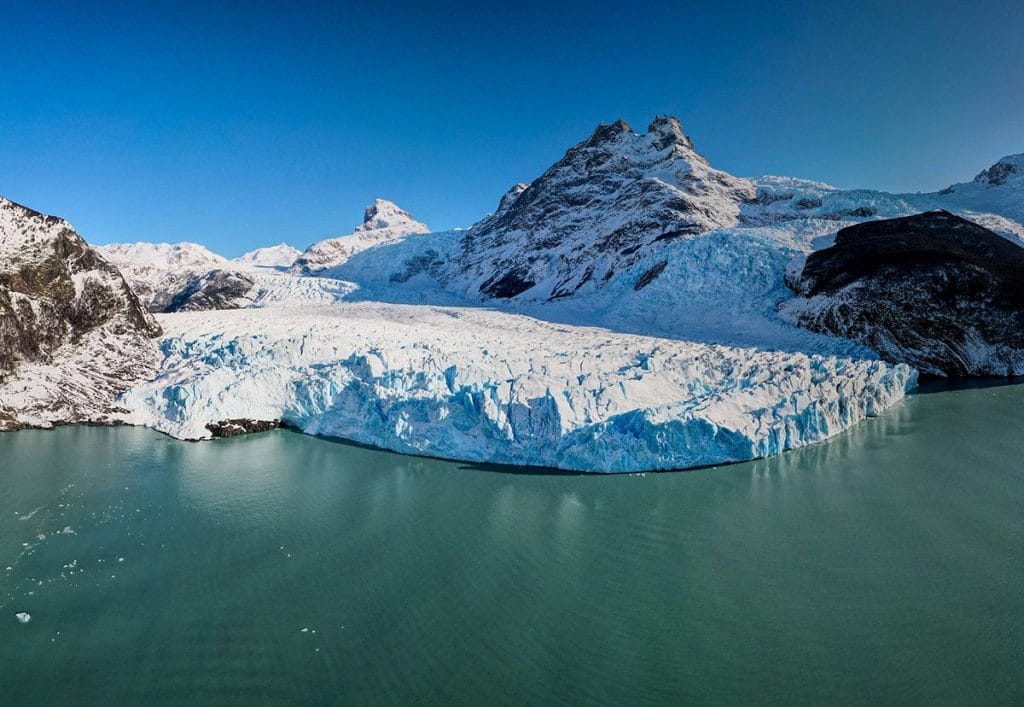
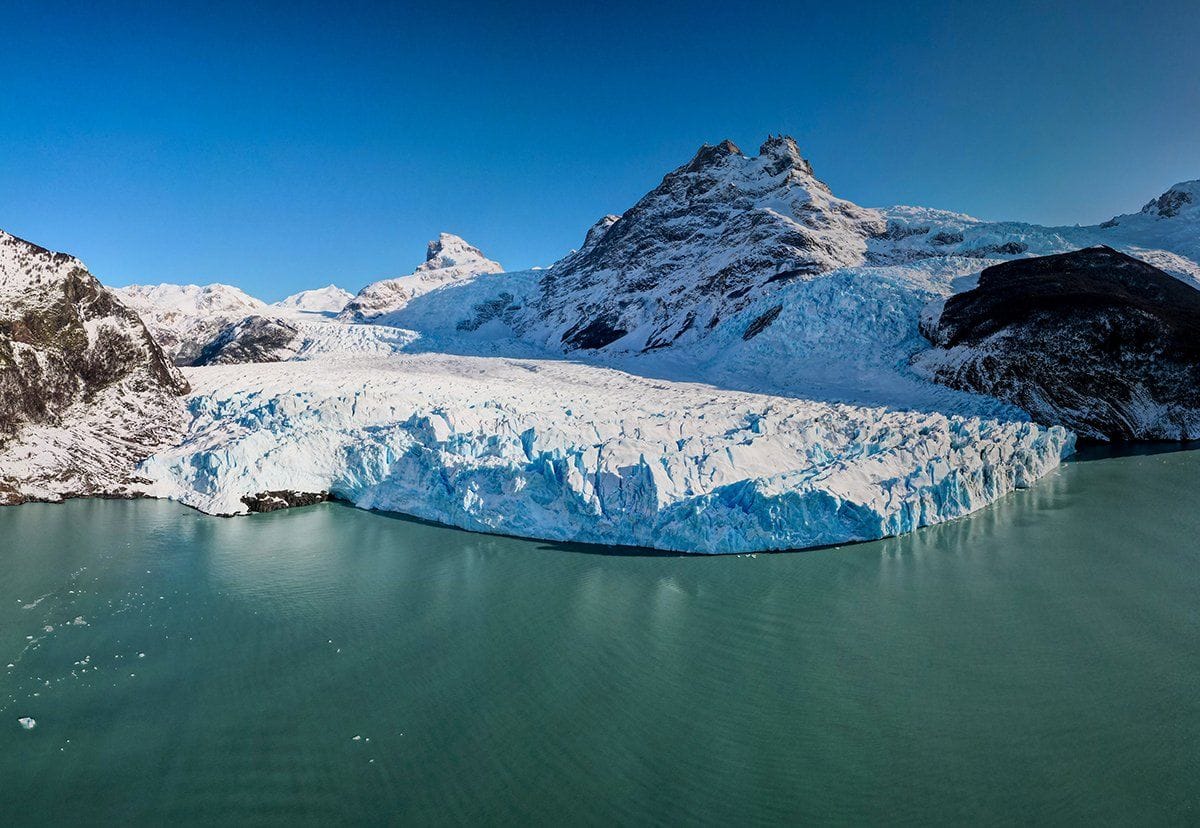
Carlos Spegazzini (1858–1926) was an Italian-born botanist and mycologist who spent his entire scientific career in Argentina. He studied the country's flora and, above all, its fungi, explored Patagonia and Tierra del Fuego on a scientific expedition, and taught in La Plata. The highest glacier in Los Glaciares National Park is named after him.
We've been sailing to the Spegazzini Glacier since 1980, and since 2019 we've welcomed our passengers to the Spegazzini Refuge, facing its ice wall. It's only natural that people ask who the name honors. Here's the long answer.
Who was Carlos Spegazzini?
| Date | Detail |
|---|---|
| Original name | Carlo Luigi Spegazzini |
| Nacimiento | 1858, in Piedmont, Italy |
| Arrival in Argentina | 1879 |
| Specialty | Botany and mycology (the study of fungi) |
| Death | 1926, La Plata |
| Tribute in the Park | The Spegazzini Glacier, the highest in Los Glaciares National Park |
From Italy to Argentina: a young mushroom researcher
Spegazzini trained in Italy, where he developed an early interest in the microscopic fungi that affect plants, a field that was rapidly expanding at the time. In his early twenties, he crossed the Atlantic and settled in Buenos Aires, in a country that was still taking stock of its natural resources.
This context explains much of his work: there were entire regions of Argentina whose flora no one had scientifically described. Spegazzini dedicated himself to collecting, classifying, and publishing, and over the years he described a huge number of new species, especially fungi, as well as plants from different regions of the country.
The expedition to Patagonia and Tierra del Fuego
In the early 1880s, Spegazzini joined a scientific expedition as a naturalist, exploring the coasts of Patagonia and Tierra del Fuego. It was one of the first opportunities to study firsthand the vegetation of the far south, from the steppe to the Fuegian forests, and many of the first botanical records of those lands came from his collections.
That Patagonian experience is the thread that connects the scientist to the glacier: the lenga and ñire forest that reaches almost to the ice in Glacier Bay is a direct relative of the forests he explored. We described it in the article "The Patagonian Andean Forest of Lenga and ñire ."
The teacher from La Plata
Upon returning from his travels, Spegazzini dedicated himself to teaching and research in La Plata, where he trained several generations of naturalists and assembled a herbarium and a collection of fungi of immense value. To this day, a botanical institute in that city bears his name, and many species of plants and fungi have been named in his honor.
It's no coincidence that his name is in the Park: much of the toponymy in Los Glaciares pays homage to scientists and explorers who helped to understand the region. We review the others in the origin of the glaciers' names.
The Spegazzini Glacier: the highest tribute
The glacier that resembles the botanical garden is the tallest in Los Glaciares National Park, with walls reaching up to 135 meters above the lake. It is located in Glacier Bay, in the northern part of Lake Argentino, and is the highlight of the All Glaciers Navigation tour , after the Upsala, Seco, and Heim glaciers.
At the foot of the glacier is Spegazzini Base, which can only be reached by water. There we disembark and the passengers tour:
- Trails with interpretive stations on glaciology, history, fauna, and flora. The section on flora is, in a way, a secondary tribute to Spegazzini. We describe them in the interpretive stations of the Spegazzini Base.
- 350m walkways up to the De Agostini Lookout, inaugurated in December 2024.
- A new viewpoint, closer to the glacier and higher, added in March 2025.
- The Spegazzini Refuge, opened in 2019, with a 280 m² hall and a window overlooking the glacier.
From the Base you can see three glaciers at once: the Spegazzini, the Heim and the Peineta.
What to look at while thinking about Spegazzini
If you're interested in botany, landing at the Base is a good excuse to look down as well as up at the ice:
- lenga and ñire trees, with their trunks twisted by the wind.
- The lichens and mosses that cover rocks and bark, a sign of clean, humid air.
- The mushrooms that appear in the forest according to the season, precisely the botanist's specialty.
- flowers Spring and summer. You have a guide in the flowers of Patagonia.
Remember that we are inside a National Park: look, take photographs and do not collect anything.
Discover the glacier that bears his name
Behind the park's tallest ice wall lies a scientist who dedicated his life to describing Argentine nature. If you'd like to see him up close and hike through the surrounding forest, check availability and current rates on the All Glaciers Navigation website.
FAQ
Who was Carlos Spegazzini?
He was a botanist and mycologist born in Italy in 1858 who made his career in Argentina. He studied the flora and fungi of the country, participated in a scientific expedition to Patagonia and Tierra del Fuego, and taught in La Plata, where he died in 1926.
Why is the glacier called Spegazzini?
It is a tribute to the botanist, in line with other names in the Park that commemorate scientists and explorers who helped to understand the region.
Where is the Spegazzini Glacier?
Located in Glacier Bay, in the northern part of Lake Argentino. It is only accessible by water and is the last glacier on the All Glaciers Navigation route.
What is the height of the Spegazzini Glacier?
It is the highest glacier in Los Glaciares National Park, with walls up to 135 meters above the lake level.


