

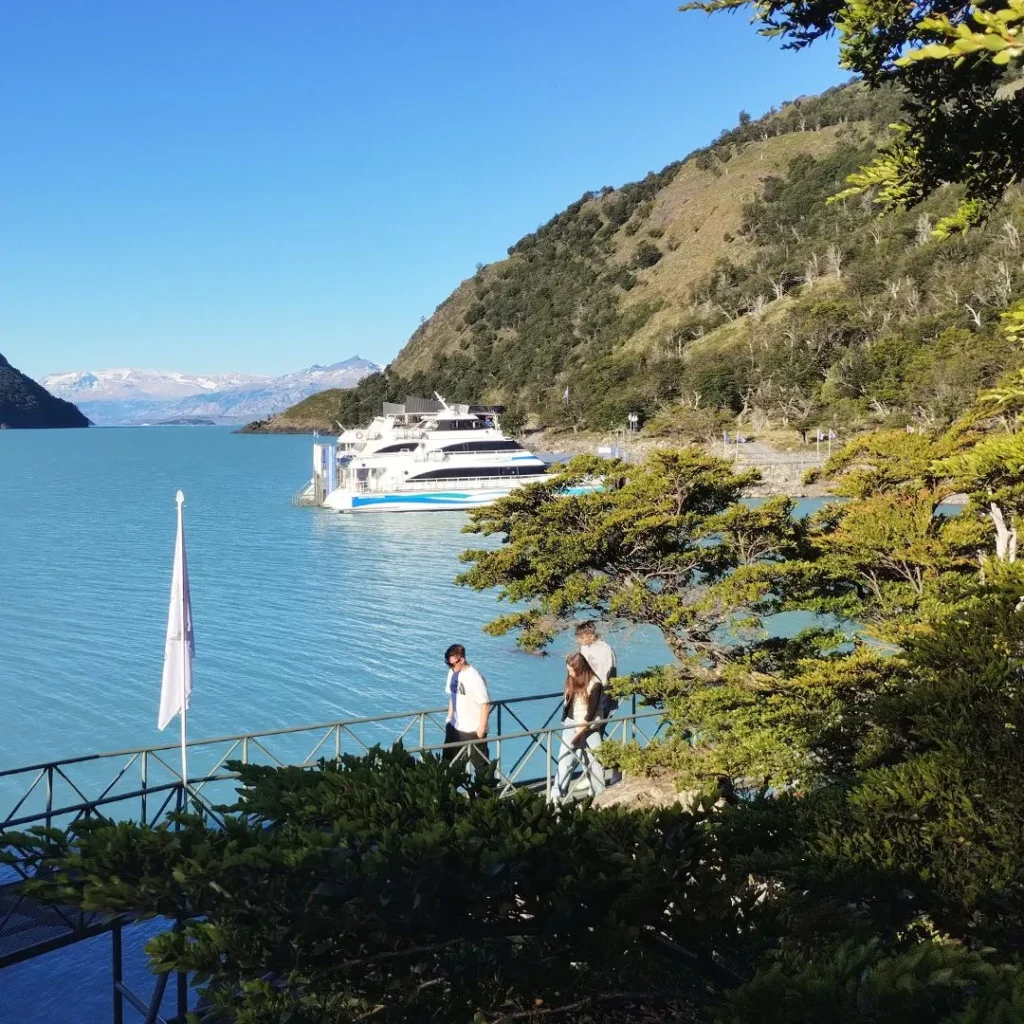
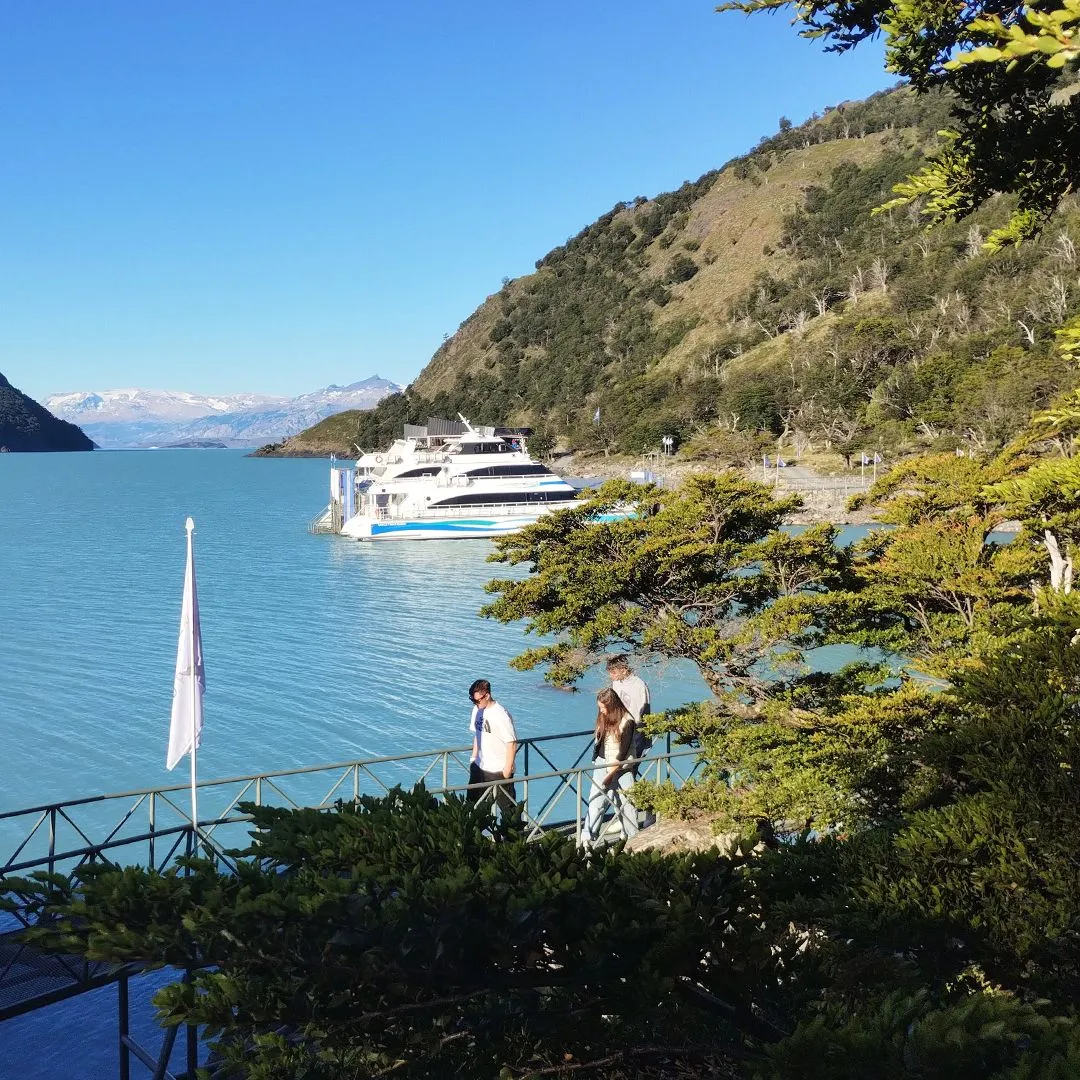
Seeing glaciers in El Calafate in summer means taking advantage of the season with the longest days: between December and February, the All Glaciers Navigation departs every day from 8:30 a.m. to 16:00 p.m., with more than 16 hours of daylight in the middle of December, more active ice in front of the Upsala and Spegazzini glaciers, and a wind that should be taken into account.
We've been sailing Lake Argentino since 1980, and summer is the season with the most passengers on our catamarans. Here's what we've learned in almost fifty summers of round trips to Glacier Bay.
What are the glaciers like in summer in El Calafate?
Summer doesn't change the route, but the mood of the landscape does. The mountains surrounding the North Arm show more rock and less snow, the forest at Spegazzini Base is in full bloom, and the lake reflects a sky that, when it clears, is an intense blue. The itinerary remains the same:
- Departure from Puerto Punta Bandera, 47 km from El Calafate, and crossing of the Boca del Diablo.
- Navigation among the icebergs of the Upsala Glacier and view of its front: a glacier of 765 km², larger than the City of Buenos Aires.
- Dry Glacier, hanging on the hillside without reaching the water, and Heim Glacier.
- Spegazzini Glacier, the tallest in the Park, with walls up to 135 m above the lake.
- Landing at Spegazzini Base, overlooking the Spegazzini, Heim and Peineta glaciers.
It's a 7-hour sailing trip and, if you add the transfer from El Calafate, about a 10-hour day.
More heat, more active ice
With warmer temperatures, the ice works harder. Surface melting increases, water seeps through cracks and tunnels, and glacier fronts tend to be more restless. In practice, facing the Spegazzini Glacier, you're more likely to hear that sharp crack before you see it, and in the Upsala area, the lake may be littered with drifting icebergs at dawn. None of this can be guaranteed: the glacier has its own rhythm. But those who spend a few minutes quietly on deck facing a wall of ice have a better chance of seeing or hearing something during the summer.
If you're intrigued by why these blocks float and why they show so little of themselves above the water, we explain it in why icebergs float.
The wind: the other protagonist of summer
There's something brochures don't always mention: in Patagonia, the wind blows strongest between spring and summer. Westerly winds cross the Andes, releasing their moisture over the Southern Patagonian Ice Field and descending dry towards the steppe. On the lake, this is noticeable in the rippled surface and the wind chill on the outer decks.
Our aluminum catamarans have enclosed lounges with large windows, so you can enjoy the tour from the comfort of your own home and step outside when needed. Our policy is the same year-round: sailing is not canceled due to bad weather; in the event of an extraordinary weather event, the situation is assessed on a case-by-case basis.
What to pack in summer: cold near ice and strong sun
The most common mistake in summer is going up in a t-shirt because it was warm in town. Near the glaciers, the air is cold and descends from the ice, and the lake water comes from meltwater. What we recommend:
- Layers: a quick-drying t-shirt, a light coat, and a windproof jacket.
- Hat and something for the neck: On the bow, in windy conditions, they are appreciated even in January.
- Solar protection: Sunglasses and sunscreen are essential, because the reflection on water and ice multiplies the radiation.
- Closed and comfortable shoes: for the trails, walkways and viewpoints of the Spegazzini Base.
- Water and a camera with a charged battery: The day is long and there's plenty of light for lots of photos.
The item-by-item details are in our guide on what to wear to glaciers.
How to make the most of long days
| Month | Approximate light | What to take advantage of |
|---|---|---|
| December | 16,5 h | The longest days of the year; a free afternoon with daylight upon returning |
| January | 16 h | Green forest at the base and terrace of the Refuge |
| February | 14,5 h | Temperatures similar to January, daylight still long |
The excursion ends at 16:00 PM at Punta Bandera, and in summer there are still many hours of daylight left. It's a great time to stroll along the coast in El Calafate or visit the Laguna Nimez Reserve for birdwatching. At Refugio Spegazzini, the 120 m² terrace is more enjoyable than ever: with sunshine, enjoying the Refugio Menu while gazing at the glacier is one of those moments people remember. And for those who prefer sailing in the late afternoon light, there's the All Glaciers Sunset option.
Book during peak season
December, January, and February see the highest number of visitors to El Calafate. With daily departures, there are more date options, but it's advisable to arrange three things in advance: your boat tour reservation, your transfer if you're not traveling independently, and your park entrance fee, which isn't included and must be purchased separately, also online at pnlosglaciares.ar . If you're deciding between seasons, our article on the best time to visit the glaciers will help you choose.
Your summer in front of the Spegazzini
Long daylight, verdant forests, vibrant ice, and a gentle breeze that makes you feel like you're in Patagonia: summer has it all. Check availability and current rates on the All Glaciers Navigation website and choose your day.
FAQ
Does the entire Glaciers program run every day in summer?
Yes. From September to April, and therefore throughout the summer, the All Glaciers Navigation has daily departures, from 8:30 a.m. to 16:00 p.m.
Is it cold while sailing in summer?
Yes, it's cold near the ice even though it's hot in El Calafate. The wind and the air coming down from the glaciers lower the perceived temperature, so it's a good idea to wear layers and a windproof jacket.
Are there more icefalls in the summer?
With warmer temperatures, the ice tends to be more active, and calving events are more likely to be heard or seen, but no glacier follows a schedule. It's a possibility, not a guarantee.
Is it very windy in summer at Lake Argentino?
The wind is usually stronger between spring and summer. Sailing is not suspended due to bad weather, and the catamarans have enclosed lounges for those who wish to continue the journey in shelter.


