

The starry sky over El Calafate is one of the clearest a traveler can see in Argentina: little light pollution outside the town, dry air, and long nights in winter. On clear nights, you can see the Milky Way, the Southern Cross, and the Magellanic Clouds, two neighboring galaxies visible to the naked eye.
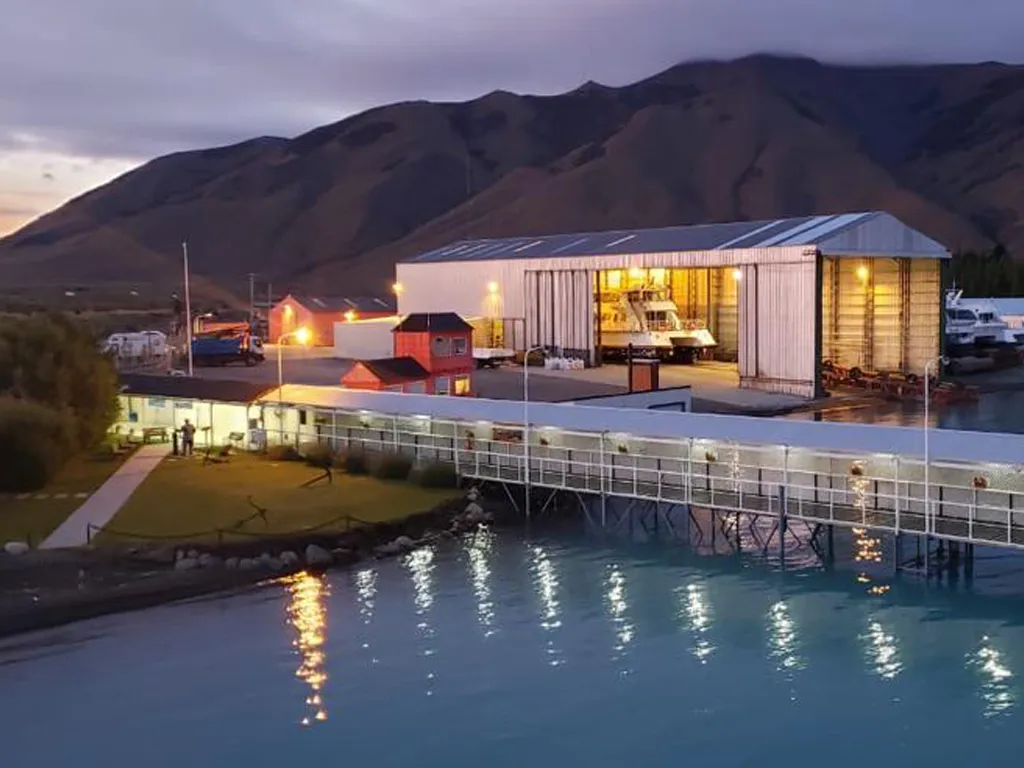
Our work is done by day, on Lake Argentino, but many of our passengers tell us that the Patagonian night was another of the highlights of their trip. We've been sailing these waters since 1980 and know that sky well. This is a simple guide to viewing it.
Why does the starry sky in El Calafate look so good?
- Little artificial light: El Calafate is a town, and just a few minutes from its streets the steppe begins, almost without lighting.
- Dry and clean air: The Patagonian steppe has low humidity and almost no pollution, which makes the stars appear sharper.
- Southern latitude: At about 50° south latitude, objects in the southern sky can be seen that are impossible to observe from the northern hemisphere.
- Open Horizons: The steppe and the lake leave the sky clear from end to end, with no buildings or mountains nearby in many directions.
What to look for in the southern sky
| Object | How to recognize it |
|---|---|
| Southern Cross | Four bright stars in the shape of a small cross, with a fainter fifth. Nearby are the "pointers," two very bright stars from the constellation Centaurus. |
| Milky Way | A milky band that crosses the sky. On winter nights, its central, densest area passes high above the horizon. |
| Magellanic Clouds | Two diffuse patches, like small, motionless clouds. They are satellite galaxies of our own. |
| Sack of Coal | A dark patch next to the Southern Cross, where interstellar dust obscures the background stars. |
| Orion | The Three Marys, visible on summer nights; from the south they appear "upside down" compared to images from the northern hemisphere. |
There is no bright North Star in the Southern Hemisphere. To find south, the Southern Cross is used: by extending its major axis about four and a half times its length, you can reach approximately the south celestial pole.
Summer and winter: two very different skies
The latitude of El Calafate means that the length of the night varies considerably throughout the year, and that defines the experience:
- Summer (December to February): The days are very long and twilight lingers; the pitch black night arrives late and lasts only a short time. One must be patient and wait until it is completely dark.
- Winter (June to August): The nights are long and dark early, ideal for stargazing without staying up late. On the other hand, it's very cold, so you really need to dress warmly.
- Autumn and spring: an intermediate point, with reasonable nights and more tolerable temperatures.
To plan your coat according to the month, our month-by-month weather guide for El Calafate is useful.
Tips for stargazing
- I chose the moon: With a full moon, its brightness outshines the Milky Way. The days near the new moon are the best.
- Stay away from the lights: Just venturing a few blocks from the center will take you to the sky. If you leave town, do so carefully, in a group, and without trespassing on private property.
- Let your eyes adjust: Spend about twenty minutes without looking at lit screens and you'll see twice as many stars.
- Dress warmly enough as if you were going sailing: Hat, gloves, windbreaker, and a mid-layer. Standing still, you feel the cold much more than when you're walking.
- Use a flashlight with a red light or the phone's night mode, so as not to dazzle yourself or others.
- For photos: Tripod, long exposure, and manual focus at infinity. If it's windy, find shelter for the camera.
From starry night to day on the lake
Stargazing is a great plan for the night before your boat trip, as long as you don't go to bed too late: the All Glaciers Boat Trip departs early from Punta Bandera Port, from 8:30 a.m. to 16:00 p.m. (from April to August, from 9:30 a.m. to 17:00 p.m.), so it's best to arrive well-rested. On the return night, however, you can stay out without feeling guilty.
For those who prefer to end the day on the water, there's also the All Glaciers Sunset option . And if you're traveling as a couple, we have even more ideas for your honeymoon evenings in El Calafate .
The sky and the ice, on the same journey
The Patagonian night and the glaciers have something in common: they both remind you of the scale of the world. By day, you'll be facing the 765 km² Upsala Glacier or the Spegazzini Glacier, with walls up to 135 m high; by night, you'll be facing the Milky Way. For daytime excursions, check availability and current rates on the All Glaciers Navigation website.
FAQ
Can you see the Milky Way from El Calafate?
Yes, on clear nights and far from town lights. It's best seen near the new moon and on long winter nights, when its central area is high in the sky.
What are the Magellanic Clouds?
They are two small galaxies, satellites of the Milky Way, which from the southern hemisphere can be seen with the naked eye as diffuse patches in the sky.
What is the best time to see stars in El Calafate?
Winter offers longer, darker, though colder, nights. In summer, the night arrives late and doesn't last long. Regardless of the season, it's best to choose days close to the new moon.
How do I find the Southern Cross?
Look for four bright stars in the shape of a small cross, next to two very bright stars aligned together, the pointers. Extending their major axis will take you approximately to the south celestial pole.


