

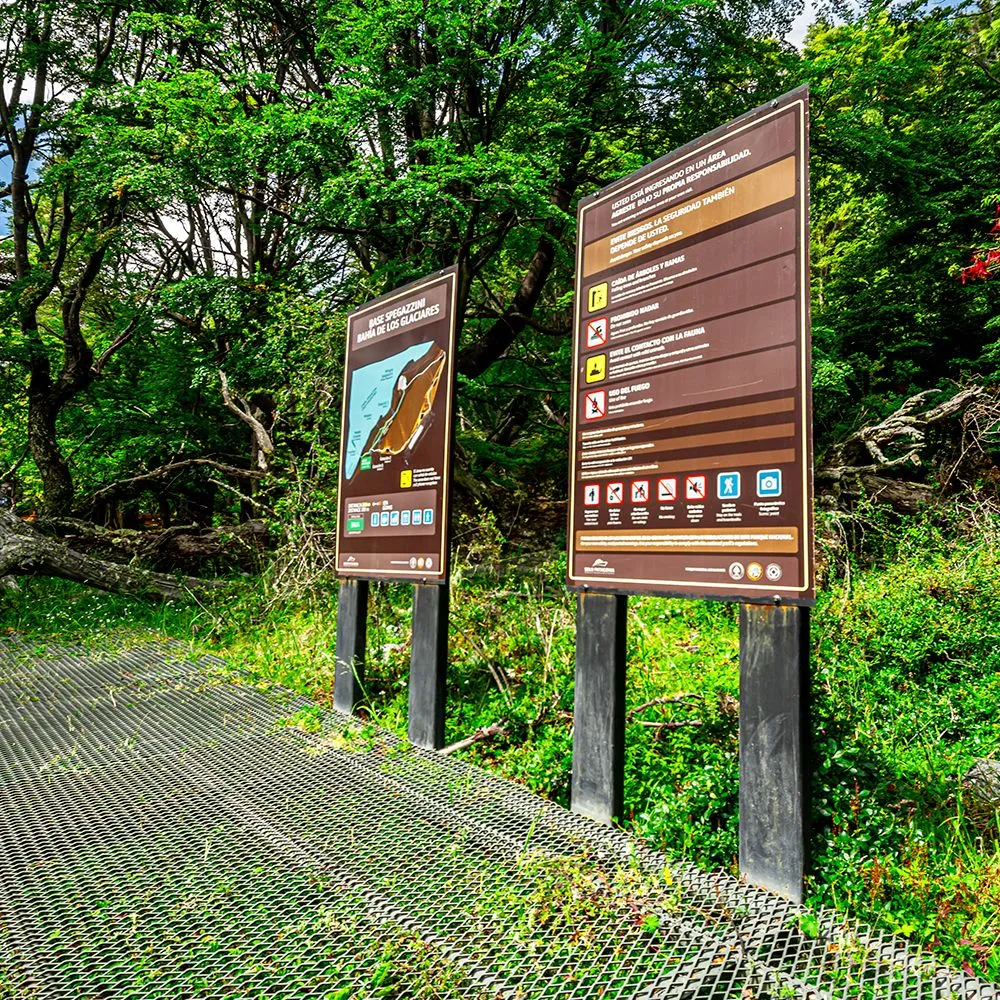
Responsible tourism on glaciers boils down to a few simple habits: buying a park entrance ticket, staying on designated trails and walkways, taking your trash with you, not touching or feeding the wildlife, not taking anything from the park, and following the instructions of park rangers and staff. These small actions, when combined, protect a fragile landscape.
We've been navigating Los Glaciares National Park since 1980, as concessionaires, and we see every day what protects the place and what wears it down. This list comes from that experience.
Why responsible tourism matters in glaciers
Los Glaciares National Park has been a UNESCO World Heritage Site since 1981 and protects most of the Southern Patagonian Ice Field, the third largest freshwater reserve on the planet. It is also a changing environment: the Upsala Glacier, for example, has visibly retreated in recent decades, as we discussed in our article on the retreat of the Upsala Glacier . No single visitor can stop this, but they can avoid adding to the pressure on a place that is already under immense strain.
The 10 Habits of the Careful Traveler
- Buy your park ticket. It's a direct contribution to the management of the protected area. It can be purchased online at pnlosglaciares.ar or at the National Parks offices at the Punta Bandera terminal.
- Walk only on trails, walkways and viewpoints. The forest floor and coastal vegetation are recovering very slowly. The walkways at Spegazzini Base exist precisely to allow you to approach the glacier without stepping on the ground.
- Take all your trash back with you. A wrapper blown by the Patagonian wind ends up in the lake. Keep it in your pocket until you find a trash can.
- Do not feed the wildlife. Foxes, birds, and guanacos that become accustomed to human food change their behavior and expose themselves to risks.
- Look from afar. If a condor, guanaco, or fox appears, stay put and use the zoom. Getting closer scares them and makes them waste energy they need.
- Don't take anything. Neither stones, nor branches, nor feathers, nor plants. What remains in its place continues to fulfill its function in the ecosystem.
- I followed the instructions of the park ranger and crew. They are there to take care of the people and the place; once on board, the captain's orders are part of the navigation rules.
- Leave the drone stored away. In national parks, drones are not allowed to fly without authorization from the National Parks Administration; they also disturb birds and other visitors.
- Reduce disposable items. A reusable bottle and a thermos solve the problem of the day without generating waste.
- Lower your voice in front of the ice. Facing Spegazzini, the creaking of the glacier and the water crashing against the icebergs are part of the experience. Silence is also a form of care.
How to arrive leaving less of a footprint
Punta Bandera Port is 47 km from El Calafate. Sharing a transfer reduces the number of vehicles on the park road each day: the optional El Calafate – Punta Bandera transfer is a simple way to do this. In El Chaltén, Aventura Viedma also offers an optional round-trip transfer from our offices in town to Bahía Túnel Port, 18 km away.
What we do as dealerships
We operate with a Management System based on the IRAM-SECTUR 42300 and IRAM-SECTUR 42560 standards, which include process quality, the preservation of protected natural areas, and safety. In practice, this translates into concrete decisions:
- Trails, walkways and viewpoints at the Spegazzini Base that organize the flow of visitors in front of the Spegazzini, Heim and Peineta glaciers.
- Interpretive stations on glaciology, history, fauna and flora: understanding the place is the first step to taking care of it.
- 100% accessible infrastructure, so that taking care of the Park doesn't mean leaving anyone out.
- Guides that explain what you're seeing and why it matters.
The wildlife, up close but not too close
From the boat and along the trails, you can see birds, guanacos, and, with luck, a condor soaring above the bay walls. The rule is always the same: observe without interfering. If you're interested in knowing which species appear and where, we've put together a guide to the wildlife of Los Glaciares National Park.
Navigate the glaciers with these habits in your backpack
The All Glaciers Navigation takes you to Upsala and Spegazzini and drops you off at Spegazzini Base, where these habits are put into practice at every step. Check availability and current rates on the All Glaciers Navigation website.
FAQ
What is responsible tourism in glaciers?
It's about visiting Los Glaciares National Park while minimizing your impact: paying the park entrance fee, walking only on trails and walkways, taking your trash with you, not feeding the wildlife, and not taking anything from the place.
Is it possible to fly a drone in Los Glaciares National Park?
Not without authorization. In national parks, the use of drones requires authorization from the National Parks Administration, and it also disturbs wildlife and other visitors.
Can you feed foxes or birds?
No. Human food alters the behavior of wildlife and puts it at risk. The correct approach is to observe from a distance and use the camera's zoom function.
What does Solo Patagonia do to take care of the Park?
It operates with a Management System based on the IRAM-SECTUR 42300 and IRAM-SECTUR 42560 standards, which include the preservation of protected natural areas, and organizes visits with trails, walkways and viewpoints at the Spegazzini Base.

