

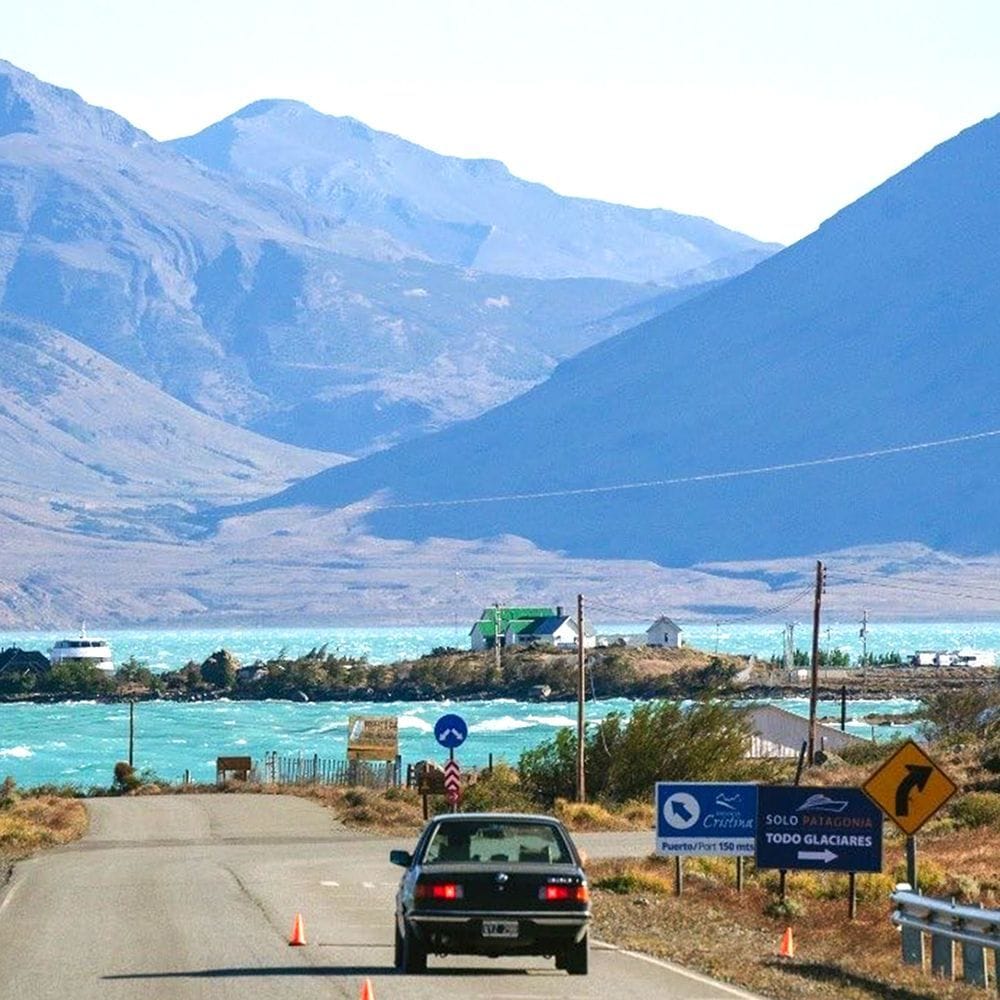
The Laguna Nimez Reserve is a protected wetland on the shores of Lake Argentino, just a few blocks from downtown El Calafate. It can be explored on foot via a flat path and is the best place in town to see aquatic and steppe birds: Chilean flamingos, black-necked swans, upland geese, and ibis, among many others.
We've been sailing on Lake Argentino since 1980, and many of our passengers ask us what to do the afternoon they arrive or the morning before their flight. Our answer is almost always the same: walk to the lagoon. It's the same lake you'll later sail on to the glaciers, but seen from the shore, it's at a different pace.
What is Laguna Nimez and where is it located?
Laguna Nimez is a shallow wetland located along the southern shore of Bahía Redonda, the inlet of Lago Argentino on which El Calafate sits. It is protected as a nature reserve and is situated north of the town center: it can be reached on foot in just a few minutes from the main avenue, without needing a car.
What's interesting is the contrast: all around there's dry steppe, low shrubs, and wind; inside the reserve, there's still water, reeds, and damp grassland. In such an arid landscape, this body of water is a magnet for wildlife, so it's best to explore it calmly and without worrying about the time.
What birds can be seen in Nimez Lagoon?
The reserve alternates between lagoons, reedbeds, grasslands, and lake shores, and each environment attracts different species. These are the ones most frequently recorded by visitors:
- Southern flamingo: The most photographed. It is seen filtering the shallow water, often in groups.
- Black-necked swan and coscoroba swan: They swim in the more open lagoons.
- Cauquenes: Patagonian geese grazing on the edges of the lagoon.
- Bandurrias: easily recognizable by their long, curved beak and metallic cry.
- Grebes, ducks and coots: the permanent inhabitants of the water.
- Southern lapwings, plovers and sandpipers: on muddy banks, especially in spring and summer.
- Birds of prey: Caranchos and chimangos patrol the area; with luck, a hawk or two.
The presence of each species changes with the season and water level, so no two trips are the same. If you're interested in learning more, our article on birdwatching in Los Glaciares National Park describes which birds also appear during boat trips.
What is the route like?
The trail is a self-guided, flat, and marked path with signs that help identify birds and plants. There are observation points where it's worth pausing for a few minutes in silence: the birds become accustomed to your presence and resume their natural movements. Walking it at a leisurely pace takes between one and two hours, depending on how often you stop.
Some practical recommendations:
- Bring binoculars or, at the very least, a cell phone with good optical zoom.
- Wear layers and something windproof: the reserve is open to the lake and the Patagonian wind is strong.
- Stay on the path and don't approach the nests. Many species are breeding in spring.
- Do not feed the birds or leave any waste.
- Check at the entrance for current visiting days and conditions, which may vary depending on the season.
When to go to Laguna Nimez
It can be visited at any time of year, but each season offers a different reserve:
| Station | What to expect |
|---|---|
| Spring | Arrival of migratory birds, courtship displays, and nesting. Lots of activity. |
| Summer | Long days and babies in the water. The wind is usually stronger in the afternoon. |
| Fall | Low, warm light, ideal for photography. Fewer visitors. |
| Winter | Austere landscape, sometimes with ice on the lagoons. Total calm. |
As for the time of day, the early morning and late afternoon are the most active for birds and offer the best light. If you arrive in El Calafate after midday, the late afternoon is a great time to stretch your legs after your journey.
Laguna Nimez and the navigation to the glaciers: the same lake
From the reserve, you can see Redonda Bay and, beyond, the main body of Lake Argentino. That same lake, which from this side appears calm and open, narrows to the west at the Devil's Mouth and flows into the North Arm, surrounded by mountains and glaciers. This is the route we take every day on the All Glaciers Navigation , from Punta Bandera Port to Spegazzini Base.
The wildlife also changes. Wetland birds dominate the lagoon; while navigating the rock walls and through the forest, it's easier to spot condors soaring; and at Spegazzini Base, birds from the Andean Patagonian forest appear. To understand this contrast, we recommend our article on the wildlife of Los Glaciares National Park.
How to add it to your trip
The lagoon works very well at three points in the trip:
- Arrival day: a short walk to acclimatize, without a car and without reservations.
- The day you sail: The entire Glaciers tour adds up to about 10 hours in total with the transfer, so it's best to leave the lagoon for another time during the trip, not for that same day.
- The last day: If your flight leaves late, it's a peaceful farewell to Lake Argentino.
From wetlands to glaciers: your next step
Laguna Nimez offers a glimpse of the shores of Lake Argentino; the boat trip takes you to its source. If you'd like to see the Upsala Glacier, the icebergs of the North Arm, and the Spegazzini Glacier from the water, and walk the walkways at Spegazzini Base, check availability and current rates on the Todo Glaciares Navigation website.
FAQ
Where is the Laguna Nimez Reserve located?
It is located north of the center of El Calafate, on the shore of Bahía Redonda on Lake Argentino. It can be reached on foot from the main avenue in just a few minutes.
What birds can be seen in Laguna Nimez?
The most common species are the Chilean flamingo, the black-necked swan, the upland goose, the ibis, grebes, ducks, and coots, as well as shorebirds and birds of prey such as caracaras and chimangos. The presence of each species varies depending on the season.
How long does it take to walk around Laguna Nimez?
The trail is flat and self-guided; walking it at a leisurely pace takes between one and two hours, depending on how long you stop at the viewpoints.
What is the best time to visit Laguna Nimez?
It can be visited at any time of year. Spring is the busiest time due to the arrival of migratory birds and nesting, and the first and last hours of the day are the best for observation.
Can it be combined with glacier navigation?
Yes, but it's best to do it on another day: the All Glaciers Navigation takes about 10 hours in total, including the transfer. The lagoon is ideal on the day of arrival or before leaving.


