

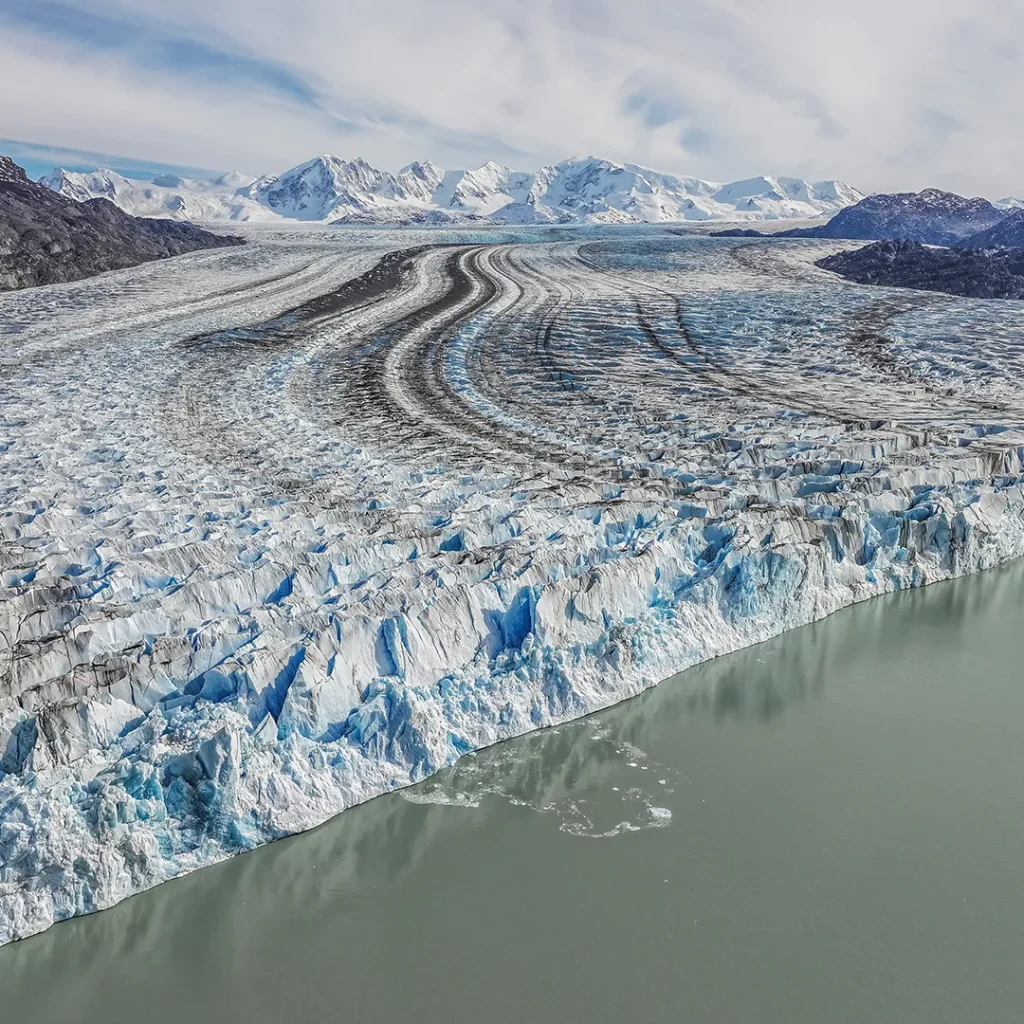
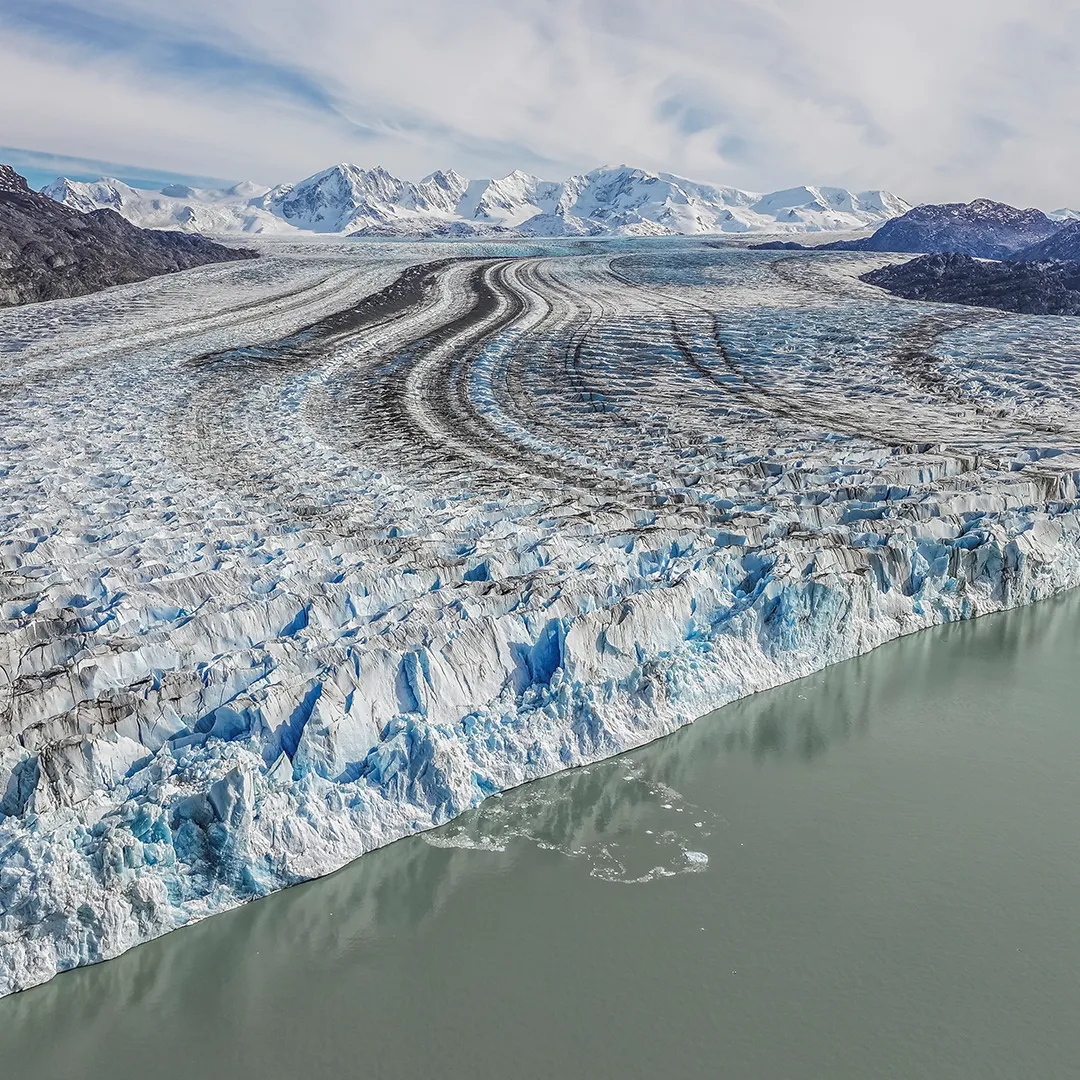
The Viedma Glacier is the largest glacier in Los Glaciares National Park and the largest in Argentina. It descends from the Southern Patagonian Ice Field and terminates at the western end of Lake Viedma, near El Chaltén. It can be seen head-on while sailing from Puerto Bahía Túnel, 18 km from the town.
We navigated it with the Viedma Adventure, and our guides explained it on board each day. These are the key facts about the glacier and what you should know to understand what you're seeing.
Viedma Glacier: basic facts
| Date | Viedma Glacier |
|---|---|
| Location | Northern sector of Los Glaciares National Park, Santa Cruz province |
| Origin | Southern Patagonian Ice Field |
| Where does it end? | On Lake Viedma, with a front over the water |
| Size | The largest in the Park and the largest in Argentina |
| Nearest town | El Chaltén |
| Port of departure for navigation | Puerto Bahía Túnel, 18 km from El Chaltén |
Where does its name come from?
The glacier takes its name from the lake, and the lake from the Spanish explorer Antonio de Viedma, who reached its shores in the late 18th century during his travels through Patagonia. It is one of the oldest place names in the region, predating Francisco P. Moreno's arrival at Lake Argentino.
How does a glacier like the Viedma form?
It all begins up high, in the Southern Patagonian Ice Field, the third largest freshwater reserve on the planet, which Argentina shares with Chile. There, snow falls in abundance, accumulating year after year, and, with the weight of new layers, compacts until it transforms into ice. This ice flows slowly downhill, channeled through the valleys, until it reaches the lake.
At its terminus, the glacier loses mass in two ways: through melting and through the calving of blocks that fall into the water and become icebergs. Many of these icebergs drift and accumulate in Iceberg Bay, which we can see from a viewpoint on the Viedma Adventure tour.
What can you see from the boat?
- Blue tones In the cracks and exposed faces: it's dense, airless ice. We explain this in Why is glacial ice blue?.
- Deep cracks, which open up due to the tensions of the ice as it moves over the uneven terrain.
- Dark stripes: rock and sediment that the glacier tears from the slopes and transports. They are called moraines.
- The sound of ice: creaks and pops coming from the front even though the detachment is not visible.
From the deck, you understand something that's lost in the photos: what we see is just the tip. The glacier stretches for kilometers to the west, disappearing into the mountains.
Ancient ice and “ice fishing”
The ice at the front formed from snow that fell long ago high in the ice field and took centuries to travel down the glacier. On the Viedma Adventure, the crew collects a piece that breaks off, and we use it for a toast on board. This ice is transparent and very compact, lacking the air that makes ordinary ice white. We describe it in our article about ice fishing.
A changing glacier
Like most Patagonian glaciers, the Viedma Glacier responds to the climate. The position of its terminus and the amount of floating ice vary with the seasons and over the years. Therefore, each voyage is different: some days the bay is full of icebergs, and other days the lake is clear. Our guides interpret these changes on board and explain what they tell us about the evolution of the glaciers.
How to visit the Viedma Glacier
The glacier's face can be seen from the water. We have two ways to do this:
- Viedma Adventure4 hours from Puerto Bahía Túnel, with an easy hike to the Iceberg Bay viewpoint, close-up view, ice fishing, and snack on board. Ideal if you're staying overnight in El Chaltén.
- Viedma Full Day Adventure: 12-hour journey from El Calafate, with the same navigation plus Parador La Leona, El Chaltén and the Chorrillo del Salto.
Both tours have daily departures from September to April, and from May to August, every other day plus Saturdays; check the departure schedule. They do not include park entrance, which must be purchased separately at pnlosglaciares.ar.
Sail to the front of the Viedma
If you want to see the largest glacier in Argentina with your own eyes, check availability and current rates on the Viedma Adventure website.
FAQ
What is the largest glacier in Argentina?
The Viedma Glacier. It is the largest glacier in Los Glaciares National Park and the largest in the country.
Where is the Viedma Glacier located?
In the northern sector of Los Glaciares National Park, in Santa Cruz. It ends at Lake Viedma, near El Chaltén.
How do you get to the front of the Viedma Glacier?
Sailing. The Viedma Adventure departs from Puerto Bahía Túnel, 18 km from El Chaltén, and reaches the front of the glacier on a 4-hour excursion.
Is it possible to visit the Viedma Glacier from El Calafate?
Yes, with the Viedma Full Day Adventure: a 12-hour day with transfer from the hotel in El Calafate, sailing to the glacier and a visit to El Chaltén.
Can the Viedma Glacier be seen in winter?
Yes. From May to August, the Viedma Adventure runs every other day plus Saturdays, from 10:30 to 14:30; it is advisable to check the departure schedule for the date of your trip.


