

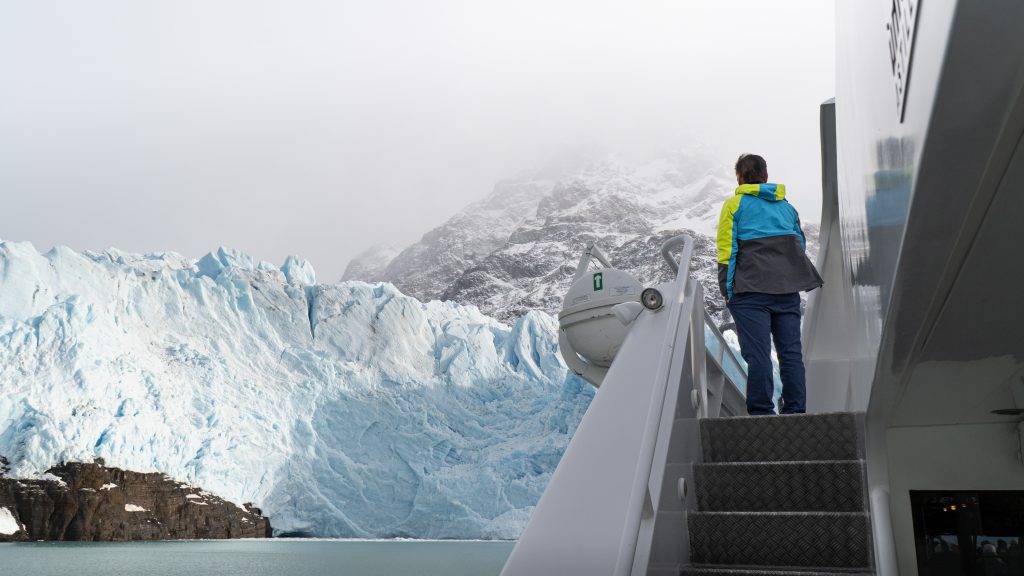
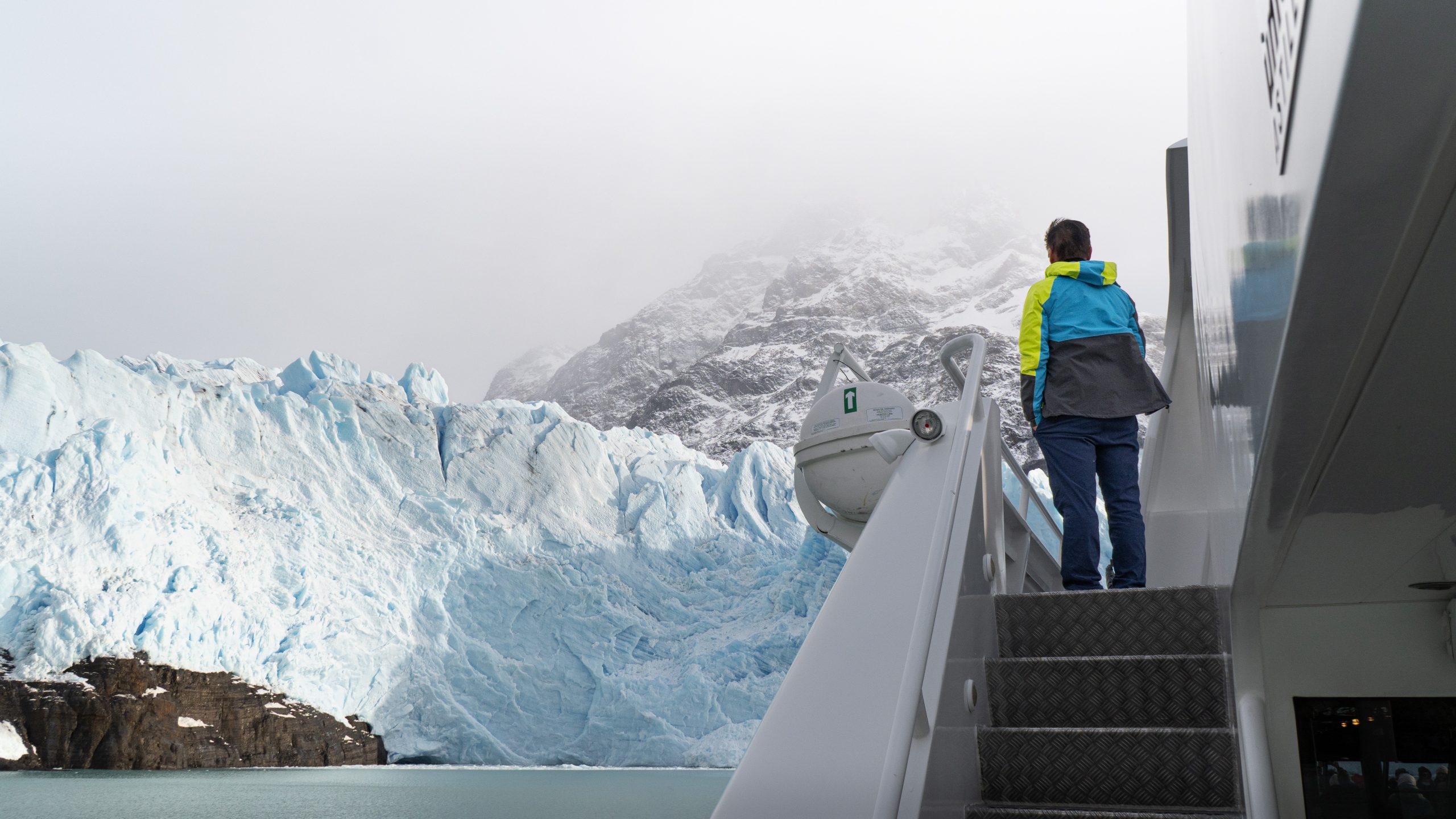
The Upsala Glacier is one of the largest in South America—765 km², larger than the city of Buenos Aires—and the Spegazzini Glacier is the tallest, with ice walls up to 135 meters high. Neither can be reached by land: the only way to see them is by sailing across Lake Argentino.
Upsala Glacier: the colossus
It originates in the Southern Patagonian Ice Field and flows down to the North Arm of Lake Argentino, at a front that was once among the largest in South America. Its name honors the Swedish university that funded the first glaciological studies of the area (1908). It is also a barometer of climate change: its retreat in recent decades is studied by scientists worldwide, and the giant icebergs it calves—floating sculptures of intense blue—are an unforgettable part of sailing.
Spegazzini Glacier: the walls of ice
It owes its name to the Italian botanist Carlos Spegazzini. Its walls, up to 135 meters high (twice the height of the Perito Moreno Glacier), enclose the Bay of Glaciers alongside the Seco and Heim glaciers. Unlike the Upsala Glacier, it remains stable—a rarity that makes it all the more valuable.
The Spegazzini Base and the refuge
Facing the glacier, the Spegazzini Base is the only landing point for navigation: accessible trails through native forest, the Spegazzini Refuge (opened in 2019) with gastronomy and direct view of the ice, and since December 2024, the new walkways with the De Agostini Lookout — a work that La Nación and Infobae highlighted as a milestone of sustainable tourism in Patagonia.
How do you visit them?
The All Glaciers Navigation Tour : 7 hours from Punta Bandera Port (47 km from El Calafate), crossing the Devil's Mouth and sailing among icebergs to the Upsala and Spegazzini ice faces, with time at the base and its refuge. Daily departures from September to April and every other day from May to August; a 100% accessible excursion with no minimum age. If you're planning your trip, start with the guide to the best excursion in El Calafate and the National Park Guide.

