


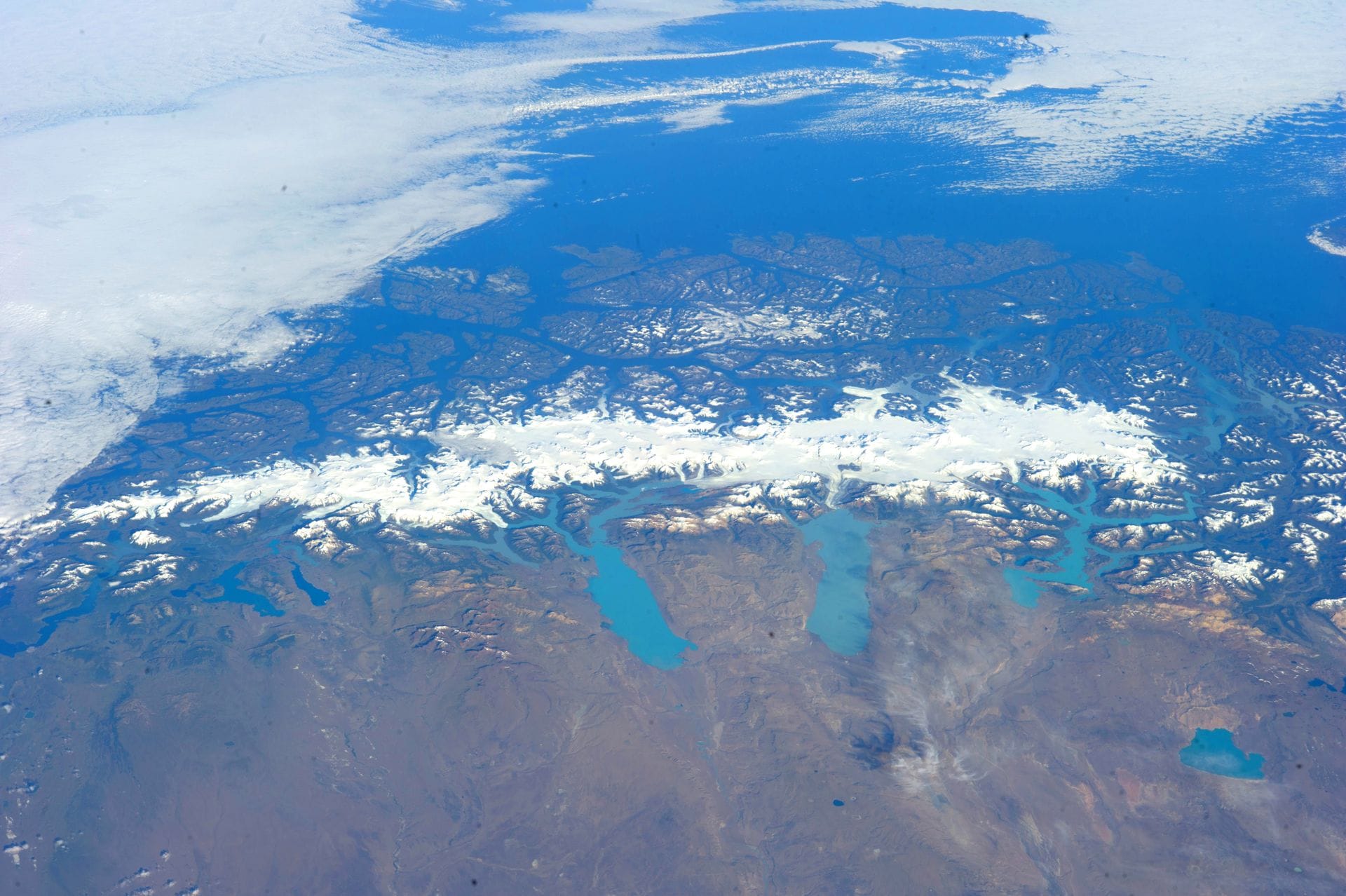
The Southern Patagonian Ice Field is an impressive mass of ice located in Argentine and Chilean Patagonia, covering an area of more than 16.000 square kilometers. It is one of the largest ice areas in the world outside the poles and one of the region's main tourist attractions.
The Southern Patagonian Ice Field is located on the border between Argentina and Chile, in the Andes Mountains, and encompasses several glaciers and lakes.
It is a place of great ecological importance, as it is home to a wide variety of animal and plant species, many of which are endemic to the region.
Among the most prominent glaciers of the southern Patagonian ice field are the
Upsala glacier, Perito Moreno glacier,
Spegazzini glacier,
Viedma glacier and the
Gray glacier, which are some of the largest in the world.
There are also many glacial lakes in the region, such as the
Argentine lake and Lake Pehoé, which are famous for their natural beauty and turquoise colors.
El southern Patagonian ice field It is one of Patagonia's main tourist attractions and draws visitors from all over the world. It is an ideal place for winter sports such as skiing and snowboarding, as well as kayaking, trekking, and ice climbing.
However, the Southern Patagonian Ice Field is also threatened by climate change. In recent decades, there has been a significant decrease in the size of the glaciers and a loss of ice mass due to rising global temperatures. This has had a negative impact on the region and has affected the lives of animal and plant species that depend on ice and snow for survival.
It is important that measures be taken to protect the Southern Patagonian Ice Field and its unique ecosystem. This includes reducing greenhouse gas emissions and promoting conservation and responsible tourism in the region. Through a joint effort, we can help preserve this natural wonder for future generations and enjoy its beauty in harmony with the environment.


