

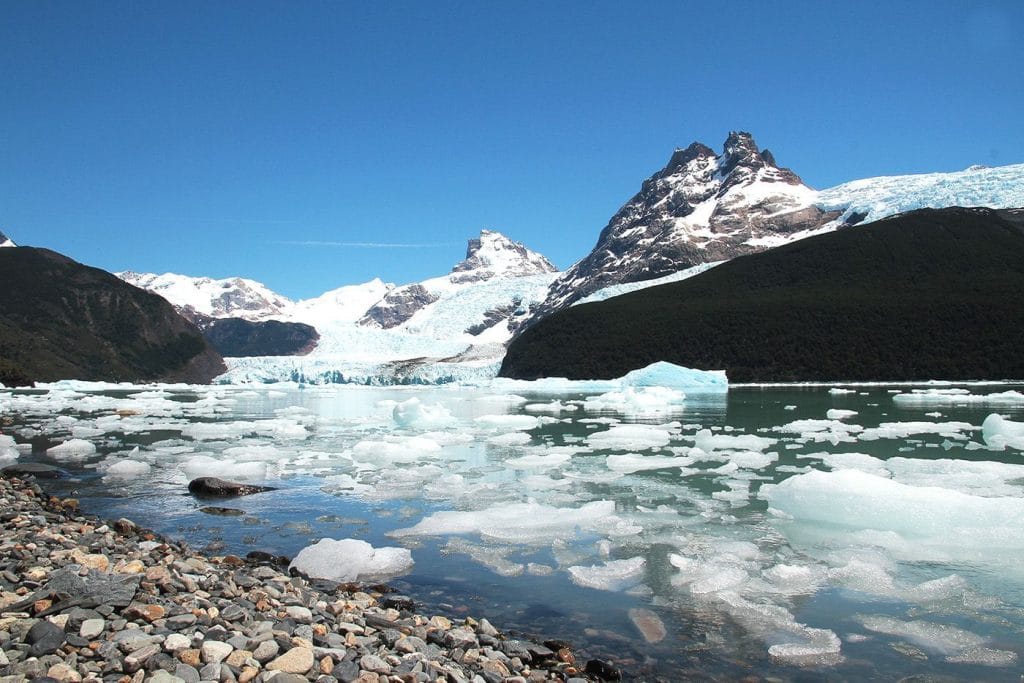
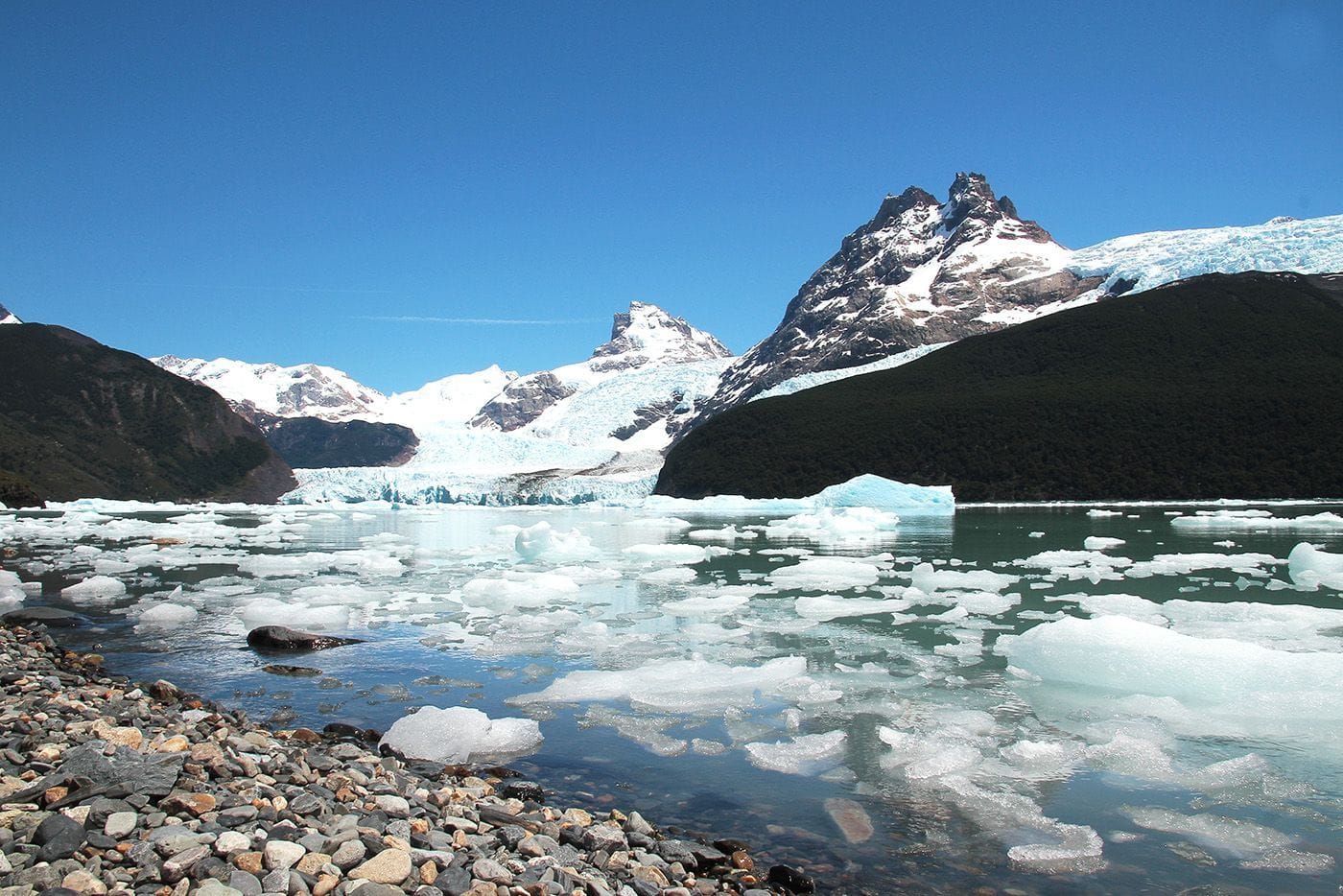
In Los Glaciares National Park, there are approximately 47 major glaciers descending from the Southern Patagonian Ice Field and about 200 smaller, independent glaciers, according to the most frequently cited figures. These are approximate numbers: the count varies depending on the criteria used and how the ice evolves over time. The most well-known glaciers, such as the Upsala, Spegazzini, and Viedma, can be seen while sailing.
We've been exploring the arms of Lake Argentino and Lake Viedma since 1980, and it's one of the questions we hear most often on board. Here's what's behind those numbers and which of those glaciers you can see with your own eyes.
How many glaciers are there in Los Glaciares National Park: the short answer
The figure you'll find in guidebooks and informational materials is usually the same: 47 major glaciers and about 200 minor glaciers . The difference between them lies in their origin, not just their size.
- Main glaciers: These are tongues of ice that originate in the Southern Patagonian Ice Field and extend eastward, often ending at Lakes Argentino and Viedma.
- Independent minor glaciers: These are smaller bodies of ice, located in the mountains, that are not dependent on the ice field. Many are mountain or hanging glaciers.
If you want to fully understand this classification, we explain it with examples in Types of glaciers: discharge, hanging and mountain.
Why the number is approximate
Counting glaciers seems simple, but it isn't. There are three main reasons why it's best to take these figures as an order of magnitude rather than an exact number:
- The cut-off criterion: The minimum size an ice body must have to be considered a glacier varies between studies.
- Shared languages: Some glaciers join or separate at their upper part, and there is not always agreement on whether they are one or two.
- The ice changes: When a glacier retreats, it can split into several tongues or cease to reach the water. What was one glacier yesterday may be two today.
That's why, when people on board ask us "how many are there exactly", we respond with reference figures and clarify that they are approximate.
The main glaciers that can be seen
Of all these glaciers, only some are accessible to visitors, and most can only be seen from the water. This table summarizes the most important ones and how to see them:
| Glacier | What distinguishes it | What it looks like |
|---|---|---|
| Uppsala | 765 km², one of the largest in South America | Sailing, in All Glaciers |
| Spegazzini | The tallest in the park, with walls up to 135 m | Sailing, in All Glaciers, with a landing at Spegazzini Base |
| Dry | Hanging glacier that does not reach the water | Sailing, in All Glaciers |
| Home | Neighbor of Spegazzini | Sailing, in All Glaciers |
| Comb | Neighbor of Spegazzini | Sailing, in All Glaciers |
| Viedma | The largest in the park and in Argentina | Sailing on Lake Viedma, in Viedma Adventure |
| Perito Moreno Glacier | One of the few that do not back down (in equilibrium) | By land, from the walkways, or from the air by helicopter |
To see what each one looks like and what to expect in each case, we have a specific guide: The main glaciers of El Calafate and what each one looks like.
How to see the most glaciers on one trip
If your goal is to see many different glaciers, these are the combinations we recommend depending on your starting point:
- From El Calafate, by water: All Glaciers This is the boat trip with the most glaciers in a single day: Upsala, Spegazzini, Seco, Heim, and Peineta, plus the crossing of the Devil's Mouth and the icebergs of the North Arm. It's a 7-hour boat trip from Puerto Punta Bandera.
- From El Chaltén, by water: Viedma Adventure Sail past the Viedma Glacier for 4 hours from Puerto Bahía Túnel, with an easy walk to the viewpoint of the Iceberg Bay.
- By land: the Perito Moreno Glacier walkways, a full day trip from Fun Patagonia, our travel agency, about 80 km from El Calafate.
- By air: Sky Over MorenoA 25-minute scenic helicopter flight that flies over the Perito Moreno Glacier and the Ameghino Glacier, among other points of interest.
With the "Todo Glaciares, Aventura Viedma" tour, you'll experience all three of the park's record-breaking glaciers in one trip: the largest (Viedma), the tallest (Spegazzini), and one of the largest in South America (Upsala). For boat trips and walkways, you'll need a National Park entrance ticket, which is not included and must be purchased separately at pnlosglaciares.ar. The helicopter flight does not require a ticket.
And what about the rest of the glaciers?
The vast majority of the park's glaciers are inaccessible to tourists. They lie in remote valleys, on the ice field, or on slopes unreachable by road. Some can be seen from afar during boat trips, like white tongues peeking out between the mountains or small glaciers clinging to the cliffs. If you sail carefully, you'll spot many more than the five mentioned in the "All Glaciers" itinerary.
FAQ
Which is the largest glacier in Los Glaciares National Park?
The Viedma Glacier, which is also the largest in Argentina, can be seen while sailing on Lake Viedma during the Viedma Adventure excursion.
Does everyone in the Glaciers program visit the Perito Moreno Glacier?
No. The entire Glaciers tour covers the Upsala, Spegazzini, Seco, Heim, and Peineta glaciers. The Perito Moreno glacier can be visited by land, from the walkways, or by helicopter.
How many glaciers can be seen in All Glaciers?
The itinerary includes five named glaciers: Upsala, Spegazzini, Seco, Heim, and Peineta. Smaller glaciers in the mountains can also be seen during the voyage.
Do all 47 major glaciers end in a lake?
Not all of them. Several end up in Lakes Argentino and Viedma, but others end up on land, in valleys or on hillsides.


