

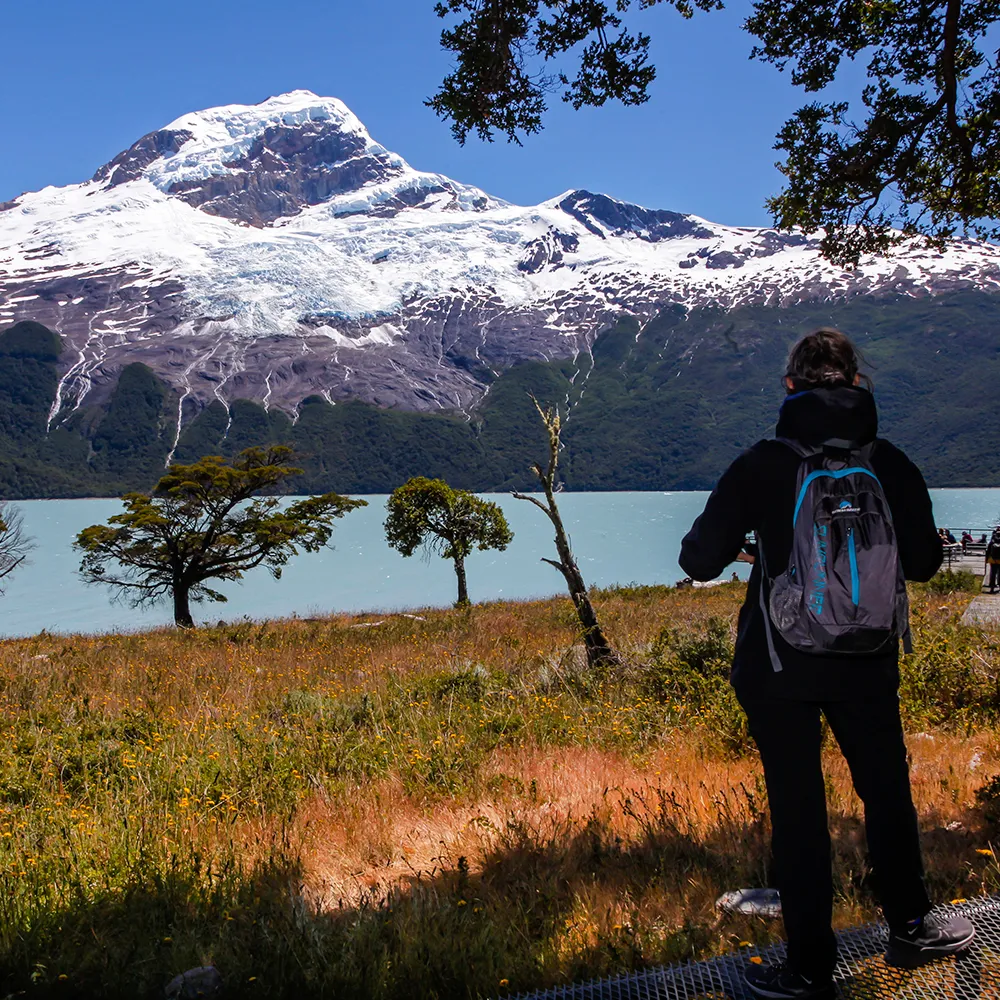
El Calafate in spring, from September to November, is the season of return: the All Glaciers Navigation resumes daily departures from 8:30 a.m. to 16:00 p.m., the peaks still hold the winter snow, the days lengthen from 11,5 to 15 hours of daylight, and the wildlife becomes active. The wind begins to pick up.
We've been sailing Lake Argentino since 1980, and every September we experience the same change of pace: after a winter of every-other-day departures, the boats set sail again every day. This is what spring brings.
Why El Calafate in spring has its charm
- Two stations in one: white mountains like in winter and long days like in summer.
- Daily departures: From September onwards there is more flexibility to choose the sailing day.
- New life: birds in the middle of the breeding season and, towards the end of the season, the first chulengos on the steppe.
- The season is starting: The pace of life in the village and on the trails is still calm, especially in September and October.
Daily departures are back
| Navigation | Opening hours | From September to April |
|---|---|---|
| All Glaciers | 8:30 a.m. to 16:00 p.m. (from April to August, from 9:30 a.m. to 17:00 p.m.) | Daily departures |
| Viedma Adventure | 10:30 - 14:30 | Daily departures |
| Viedma Full Day Adventure | 7:30 - 19:30 | Daily departures |
The "All Glaciers" tour covers the entire glacial cycle: Boca del Diablo, icebergs and the face of the Upsala Glacier, Seco Glacier, Heim Glacier, Spegazzini Glacier, and disembarkation at Spegazzini Base, with a view of Peineta Volcano. It's a 7-hour boat trip and about 10 hours total if you include the transfer from El Calafate. You can see the complete tour in the "All Glaciers Navigation" section.
Snow on the peaks, ice with more contrast
In September and October, the mountains surrounding the North Arm and Glacier Bay still have snow halfway up their slopes. This white blanket frames the glaciers and gives the landscape a depth that is lost in the height of summer. As November progresses, the snow rises and the rock appears.
At Spegazzini Base, the forest also transforms: the lenga and ñire trees, which lose their leaves in autumn, begin to sprout in spring with a light, almost luminous green. Walking the walkways towards the De Agostini Lookout among the awakening trees, with Spegazzini in the background, is one of the station's iconic images.
Active fauna: breeding birds and living steppe
Spring is breeding season for many birds. Upland geese and ducks can be seen in pairs along the coasts and in calm bays; on the rocky cliffs, the Andean condor takes advantage of the wind that has returned with force. At Spegazzini Base, the forest fills with the songs and tapping of the Magellanic woodpecker.
On land, the steppe surrounding El Calafate is just beginning to turn green, and by late spring, the guanacos, the young of the guanacos, are born. If you're interested in birds, the Laguna Nimez Reserve is just a short walk from the center of El Calafate. And if you want to know what to look for from the boat, read our guide to the Andean condor in Patagonia.
The wind is picking up again.
Spring is the season when the Patagonian winds regain their prominence: September begins to blow more strongly, and October and November are usually windy. On the lake, this wind is felt on the outer decks and the rippling surface of the water. Our catamarans have enclosed lounges with large windows so you can enjoy the scenery from the comfort of your home, and our policy remains the same: sailing is not canceled due to bad weather; in the event of an extraordinary weather event, the situation is evaluated on a case-by-case basis.
What to wear in spring
It's the most changeable season: a cold, frosty morning can end in a sunny afternoon. Our recommendations:
- Layers: thermal, fleece and windproof and waterproof jacket.
- Hat and gloves, essential in September and October.
- Sunscreen and sunglasses: snow, water, and ice reflect a lot of light.
- Closed footwear with good soles is recommended for the trails, which may be wet from the melting snow.
The full details are in what clothes to wear to the glaciers.
Choose your spring date
If you're looking for snow on the peaks, aim for September or October; if you prefer long days, November. Check availability and current rates on the All Glaciers Navigation website . And if you're still comparing seasons, take a look at what El Calafate is like in autumn.
FAQ
Since when does Todo Glaciares come out every day?
From September. From September to April, the All Glaciers Navigation has daily departures, from 8:30 to 16:00 (from April to August, from 9:30 to 17:00); from May to August it departs every other day.
Is there snow in El Calafate in spring?
In September and October, the mountains surrounding the glaciers usually retain snow. There may be some early snowfall in the village, but it typically melts quickly.
Is it very windy in spring?
Yes, the wind picks up again from September and is frequent in October and November. Sailing is not suspended due to bad weather, and the boats have enclosed lounges.
What wildlife can be seen in spring?
It's breeding season for many birds, such as geese and ducks along the coast, and towards the end of the season, guanaco calves hatch on the steppe. The condor can be seen perched on the rock faces, though its presence is not guaranteed.


