

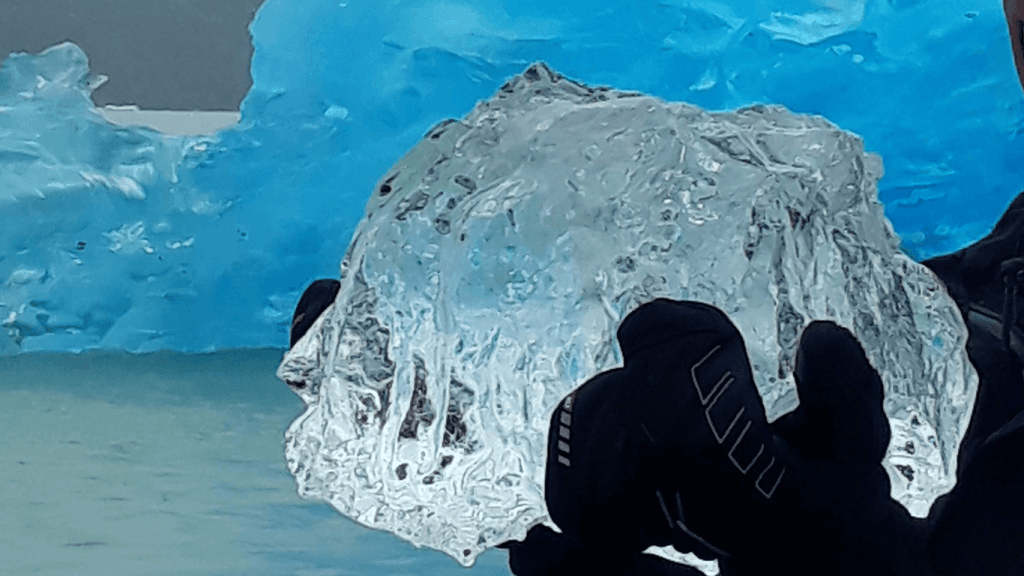
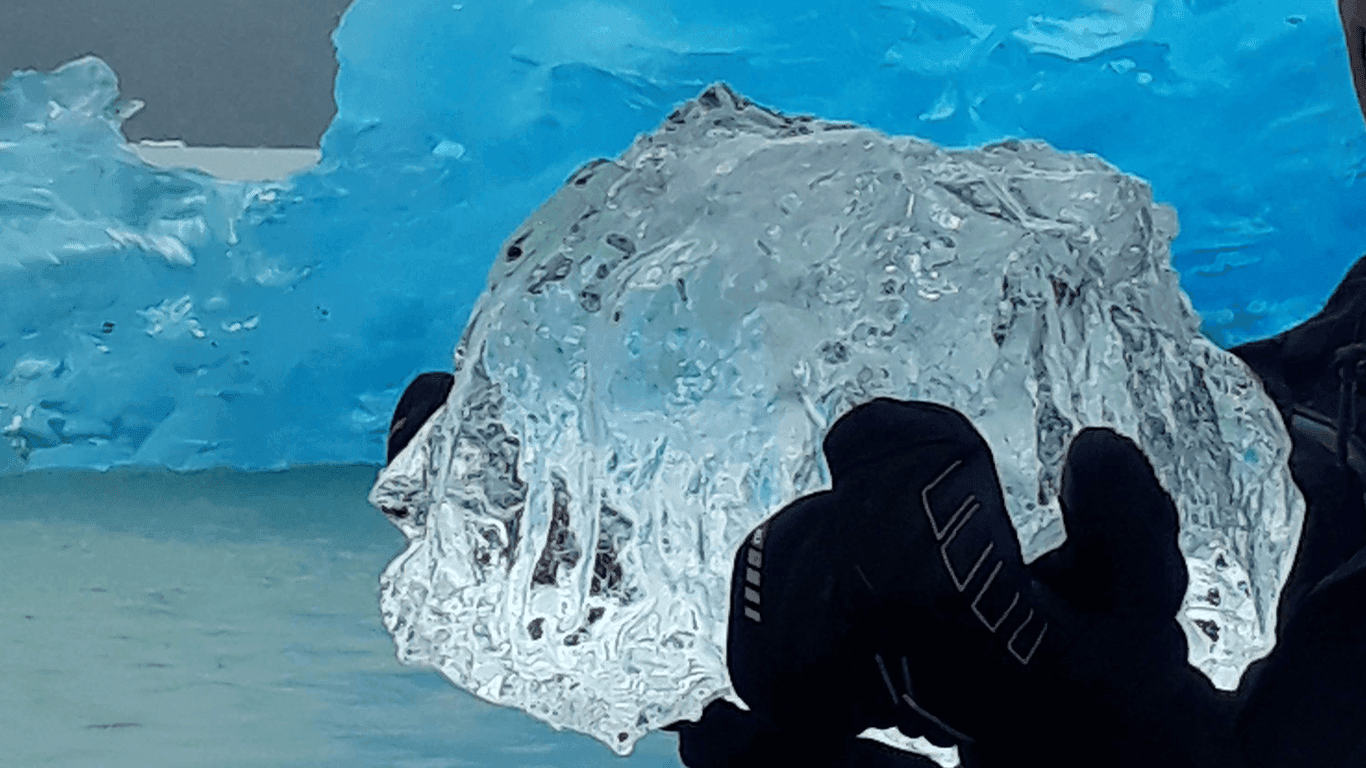
The Perito Moreno Glacier is not retreating because it is in equilibrium: the ice it gains in its accumulation zone compensates for the ice it loses through melting and calving at its terminus. It has a surface area of approximately 250 km², a terminus about 5 km wide that rises 60 to 70 m above the water, and is located about 80 km from El Calafate.
At Solo Patagonia, we've been navigating Lake Argentino since 1980 and live alongside its glaciers every day. The Perito Moreno Glacier is the most famous in the region, and although our "All Glaciers" cruise doesn't visit it, it's the question we hear most often on board. Here we've gathered the basic information, explained without technical jargon.
Perito Moreno Glacier: Key Facts
| Date | Approximate value |
|---|---|
| In total area | Approximately 250 km² |
| Front width | About 5 km |
| Height of front above water | Between 60 and 70 m |
| Distance from El Calafate | About 80 km |
| Location | Los Glaciares National Park, on Lake Argentino |
| Origin | Southern Patagonian Ice Field |
Its name honors Francisco Pascasio Moreno, the explorer who traveled across Lake Argentino in the 19th century. We tell his story in Who was Perito Moreno: the explorer of Lake Argentino.
Why it doesn't recede: accumulation and ablation
Every glacier functions like an account with income and expenses. In the upper part, the accumulation zone , the snow that falls each year compacts and transforms into ice. In the lower part, the ablation zone , the glacier loses mass through melting and the calving of blocks at its terminus.
- If you win more than you losethe glacier advances.
- If you lose more than you gainIt is receding, as is happening with most of the world's glaciers.
- If both sides balance each other outThe front has remained in a similar position over the years. That is the case of the Perito Moreno Glacier.
Being in equilibrium doesn't mean it's stationary. Ice is constantly flowing from the mountain range into the lake, which is why the ice front is renewed and blocks calve off almost daily. What remains stable is the position of the front, not the ice itself. The clearest contrast is in the lake itself: Lake Upsala is indeed retreating, and we explain this in Upsala Glacier: Retreat, Causes, and What It Tells Us About the Climate.
Glaciologists closely monitor the Perito Moreno Glacier because its equilibrium can shift with climate change. If you're interested in how this is measured, we explain it in Glaciology: How to Study a Glacier and What Scientists Measure.
The ice dam breaks up in Brazo Rico
The most well-known phenomenon of the Perito Moreno Glacier occurs when it advances until it reaches the shore of the Magallanes Peninsula. This contact forms an ice dam that separates the Brazo Rico arm of Lake Argentino from the rest of the lake.
- With the canal closed, the water from Brazo Rico cannot drain and its level rises above the rest of the lake.
- The water pressure begins to seep underneath and through the ice, until it opens a tunnel.
- The tunnel widens and an arch of ice remains over the channel.
- Finally the arch collapses, and the accumulated water flows back into the lake.
These ruptures don't occur at a fixed frequency: several years can pass between one and the next, and no one can predict the exact day of the collapse. That's why, when they happen, they make the news.
How to visit Perito Moreno
Important clarification: Not all Glaciers tours go to Perito Moreno . Our boat trip travels along the North Arm of Lake Argentino towards Upsala, Spegazzini, Seco, Heim, and Peineta Glaciers. To visit Perito Moreno, our agency, Fun Patagonia, offers two options:
- Perito Moreno Glacier Footbridges: Full day tour from 9:00 AM to 17:00 PM departing from your hotel, easy difficulty, and daily departures. National Park entrance fee required. You can add a packed lunch or the "Calafate Menu".
- Sky Over Moreno: Enjoy a 25-minute scenic helicopter flight from the Solo Patagonia heliport at Punta Bandera, for groups of 1 to 3 passengers. No park entrance fee required.
So, in two days you can see the Perito Moreno from land or from the air and navigate among the glaciers of the North Arm with Todo Glaciares.
FAQ
Is the Perito Moreno Glacier growing?
It does not grow steadily: it is considered to be in equilibrium, because what it gains in the accumulation zone compensates for what it loses on the front. Its position remains similar over the years.
How high is the Perito Moreno Glacier's front?
The front rises between 60 and 70 m above the water, in a width of about 5 km.
Is it possible to know when the next breakup will happen?
No. Ice dam breaks in Brazo Rico do not have a fixed date and can be several years apart.
Does the All Glaciers navigation route pass through Perito Moreno?
No. The All Glaciers program visits the Upsala, Spegazzini, Seco, Heim, and Peineta glaciers. For the Perito Moreno glacier, there are the Fun Patagonia walkways and Sky Over Moreno facilities.


